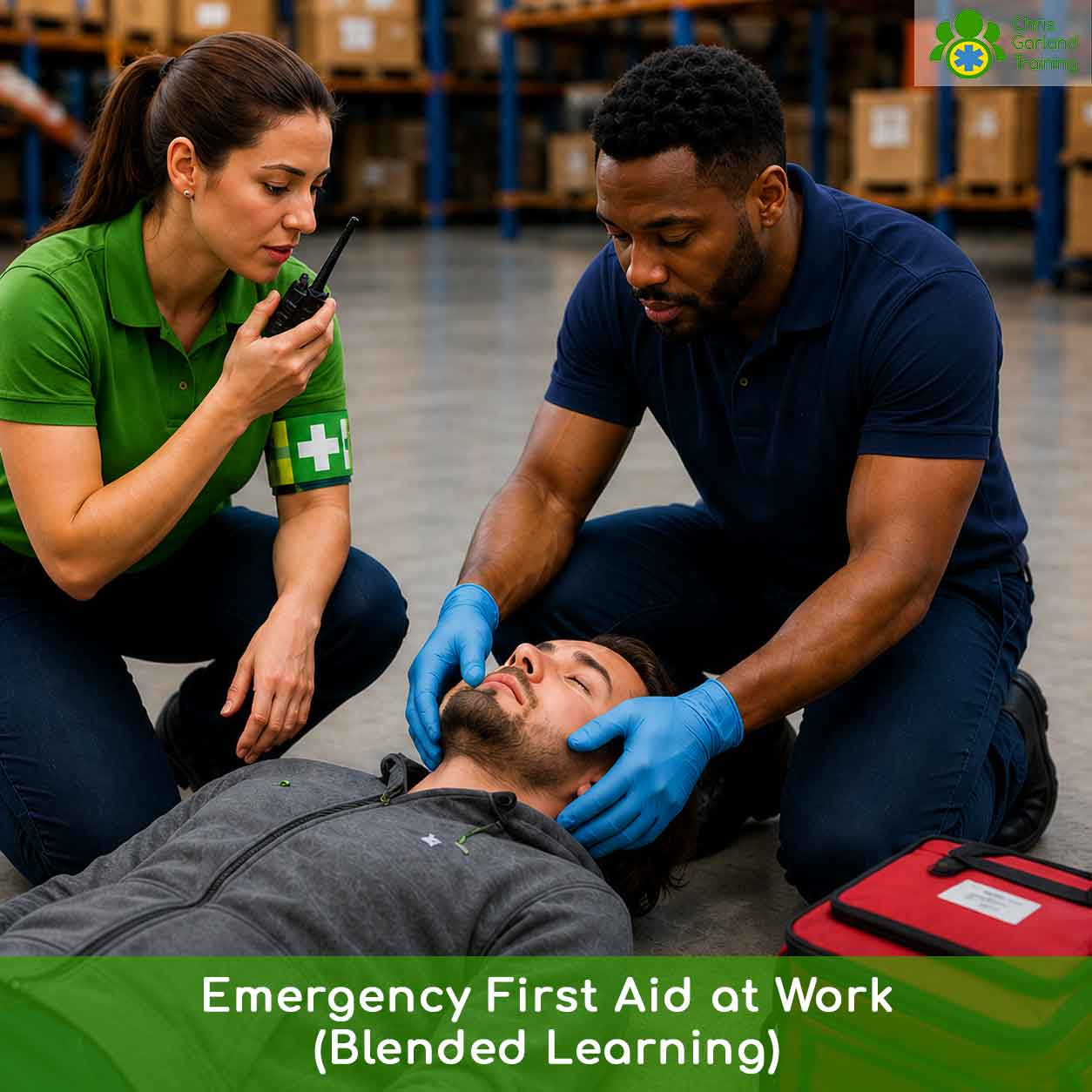
Emergency First Aid at Work | Blended Learning Course
Under the Health and Safety (First Aid) Regulations 1981, every employer must ensure adequate first aid provision. Specifically, for low-hazard workplaces like offices, shops, and libraries, the EFAW qualification meets this legal requirement. Therefore, companies must select valid training routes to protect their workforces.
This blended learning version delivers exactly the same qualification as our standard face-to-face EFAW course. However, it splits the syllabus across two distinct phases. Specifically, delegates complete their theory online before attending the practical classroom block.
Crucially, blended learning does not mean a shorter or easier qualification route. The underlying syllabus remains entirely identical. In addition, the end assessments and final certificates are completely unchanged. What changes is simply where the theoretical learning happens.
Therefore, this setup carries real operational value for organisations managing complex shift patterns. For instance, it benefits dispersed teams or delegates who travel significant distances. Candidates complete the theoretical material at their own pace before arrival.
How the Blended Timeline Works
This flexible format systematically optimises your training time through two carefully structured learning phases:
- Phase 1: Online Pre-Learning: Complete approximately two hours of self-paced theory on any digital device. Specifically, this phase covers basic anatomy, physiology, and hazard recognition. On completion, you will receive an online entry certificate. Subsequently, you must bring this document to your practical session.
- Phase 2: Classroom Practical Day: This interactive element focuses entirely on hands-on practice, scenarios, and formal testing. Generally, we run these classroom sessions from 9:00am until 3:00pm. Therefore, this structure drastically reduces your time away from commercial work duties.
Comprehensive Course Syllabus
Our curriculum mirrors the core HSE Emergency First Aid syllabus guidelines perfectly. Furthermore, all learning updates align with current UK Resuscitation Council clinical frameworks:
- Legislation: Reviewing statutory first aid regulations alongside individual employer and first aider responsibilities.
- Incident Management: Evaluating active scenes safely to prioritise casualties and manage emergencies promptly.
- Infection Control: Implementing protective workflows to prevent cross-infection during clinical treatments.
- Record Keeping: Maintaining accurate incident logs and first aid action records legally.
- Resource Management: Understanding regulatory first aid kit contents and how to use assets properly.
- Unresponsive Casualties: Placing breathing casualties into the recovery position and monitoring vital signs.
- Basic Life Support: Executing floor-level CPR and operating automated external defibrillators confidently.
- Cardiovascular Conditions: Identifying the critical clinical differences between heart attacks and sudden cardiac arrests.
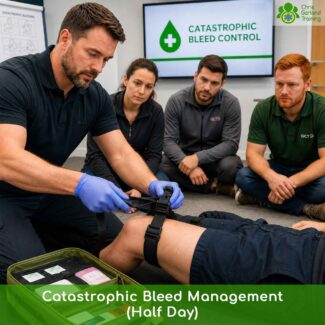
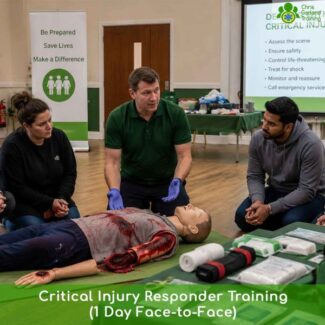
- Trauma Care: Managing wounds, severe bleeding, catastrophic haemorrhages, and proper medical tourniquet applications.
- Minor Injuries: Administering prompt care for cuts, grazes, bruises, splinters, and minor burns safely.
- Acute Events: Recognising medical shock symptoms and supporting organisations experiencing active seizures.
Please note that tourniquet application remains a critical part of the recommended HSE syllabus. Specifically, it forms an essential skill for managing catastrophic haemorrhages outside. Therefore, we teach it comprehensively because national guidelines dictate we should.
Course Details and Assessment Framework
We deliver this extensive curriculum through immersive face-to-face interaction. Alternatively, if you manage higher hazards, consider our First Aid at Work Course | Blended Learning track instead.
- Duration: This blended track features two hours of online learning and one intensive classroom session.
- Daily Schedule: Classroom modules typically run efficiently from 9:00am until 3:00pm at our facility.
- Testing Rules: Candidates must pass a multiple-choice paper (70%) and practical observations (100%).
- Physical Demands: Specifically, you must be physically capable of performing continuous CPR on the floor.
- Certification: Certificates remain valid for three years from your formal issue date.
We schedule open courses regularly at our dedicated facility in Knutsford, Cheshire. Please view the booking selector above to review live dates, current availability, and pricing matrices. In addition, you can check exact morning start times there.
HSE Compliance and Punctuality Rules
Regulators enforce strict contact-time criteria to validate these statutory certificates. Therefore, exceptional punctuality remains completely mandatory for every candidate. If you arrive more than fifteen minutes late for any day, we must turn you away. Consequently, late candidates immediately forfeit their place and all paid booking fees.
Does your team operate in forestry, outdoor environments, or on Forestry England land? If so, you will require our specialised Emergency First Aid at Work +Forestry | Blended Learning course instead.
Prerequisites and Group Parameters
This qualification is suitable for anyone aged sixteen or older assuming nominated first aider roles. Meanwhile, candidates aged fourteen to sixteen can also earn a valid certificate. However, employers cannot rely on them as a sole nominated workplace first aider.
We recommend a baseline guideline background of GCSE Level 1 literacy standard for all technical materials. In addition, we conduct all instructions and assessment papers strictly in English. Please contact our administrative office before booking to discuss arranging any necessary reasonable adjustments.
Open scheduled courses require a minimum of six candidates to run under HSE rules. Meanwhile, health and safety regulations limit cohort sizes to twelve delegates per instructor. This configuration helps you to guarantee high-quality feedback during practical drills.
Venues and Private Corporate Bookings
Our open courses run regularly at our modern training centre in Knutsford, Cheshire. Please explore our dedicated Joining Instructions page to review dress codes and local parking information.
Alternatively, our experienced instructors travel nationwide to deliver private training directly at your premises. We gladly adapt our practical scenarios to align with your workplace environment. Consequently, please complete our Corporate & Bespoke Training Quotations Form to request a private group quotation.
Related Training and Compliance Guides
We provide multiple alternative training formats and legal safety updates to support your team workflows perfectly.
- Traditional Classroom: Prefer learning entirely in person? View our standalone Emergency First Aid at Work course.
- Outdoor Blended Learning: Manage wilderness risk flexibly with our Forest School First Aid (Blended Learning) pathway.
- Outdoor Face-to-Face: Prefer traditional wilderness group training? Access our 3-day Forest School First Aid | Face-to-Face course.
- Mobility Logistics: Prepare your workforce for emergency building clearances by booking our active Evacuation Chair Training module.
- Course Selection: Not sure which qualification matches your corporate framework? Read our detailed FAQ page.