Emergency First Aid at Work +F (EFAW+F) | Blended Learning Course
Lower-risk operations on Forestry England property present distinct environmental challenges. Standard workplace training does not fully prepare you for remote outdoor tasks. Specifically, longer ambulance response times mean workers must act as vital first responders. Therefore, this specialised blended course bridges critical safety gaps seamlessly.
This flexible option reduces your team downtime without lowering high assessment standards. The self-paced theory is completed online beforehand. Consequently, the classroom day focuses entirely on physical skills and scenarios. This format is ideal for land surveyors, rangers, and deer stalkers.
How the Blended Course Works
The qualification splits into two distinct, manageable phases. First, delegates complete two hours of self-paced online pre-learning. This digital module covers essential legislation, basic anatomy, and forestry contexts. Second, students attend a six-hour face-to-face practical day in the classroom.
What You Will Learn
Our comprehensive syllabus balances standard workplace health regulations with advanced forestry protocols. For example, the course addresses these core fields:
Statutory Emergency First Aid Content
- Legislation: Reviewing health and safety regulations alongside core first aider responsibilities.
- Scene Management: Assessing emergency situations safely, promptly, and effectively within outdoor environments.
- Life Support: Administering the recovery position, cardiopulmonary resuscitation, and automated external defibrillator operations.
- Trauma Care: Treating choking, physical wounds, minor burns, scalds, severe bleeding, and medical shock.
- Minor Injuries: Administering appropriate first aid for small cuts, grazes, bruises, and small splinters.
- First Aid Kits: Understanding required first aid kit contents tailored for remote working environments.
Forestry Commission Syllabus Elements (PPG59)
- Catastrophic Bleeding: Deploying professional tourniquets and advanced haemostatic agents to control severe blood loss.
- Crush Injuries: Recognising critical time factors and managing severe physical crush trauma effectively.
- Thermal Stress: Treating the profound physical effects of extreme cold hypothermia and extreme heat hyperthermia.
- Lyme Disease: Identifying early symptoms, executing safe tick removal, and tracking medical referral paths.
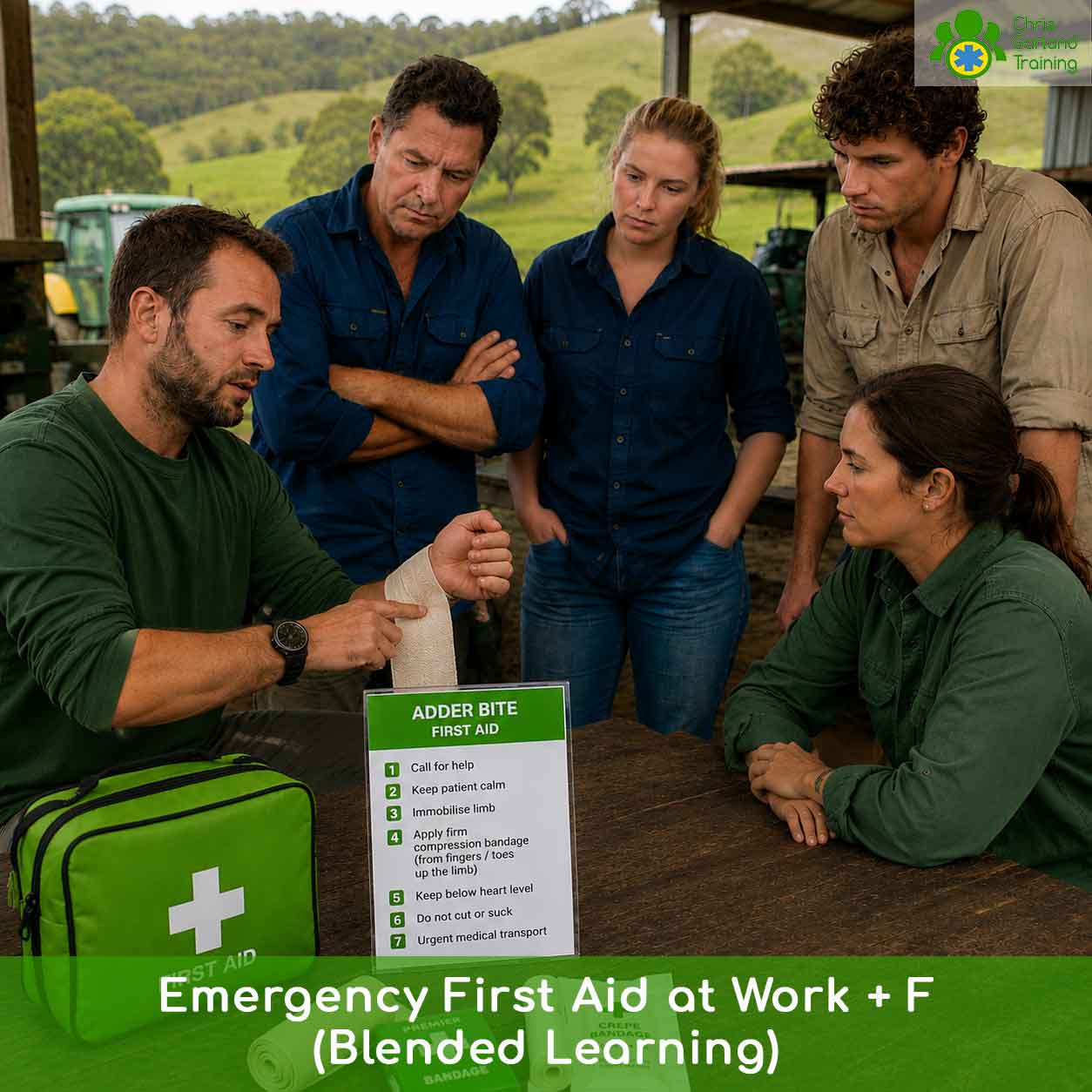
- Wildlife Hazards: Administering prompt emergency first aid care for native adder snake bites.
- Anaphylaxis: Managing severe allergic reactions and respiratory distress shocks safely in remote settings.
Course Duration and Structure
The course demands eight hours of total learning time to accommodate the extra forestry topics. Specifically, the HSE requires a minimum of six hours for a valid emergency first aid certificate. The extra +F elements add approximately two further hours of practical training. As a result, this course runs slightly longer than a standard Emergency First Aid at Work course.
Prerequisites and Driver CPC Parameters
Candidates must be physically capable of performing floor-level cardiopulmonary resuscitation techniques. Specifically, you will demonstrate procedures on a training manikin on the floor. We conduct all instructions and assessment papers strictly in English. We recommend a basic level 1 literacy baseline for all delegates.
This training perfectly suits anyone aged 16 or older with site safety duties. Candidates aged 14 to 16 may attend to build foundational life-saving skills. However, employers must not rely on them as sole nominated first aiders.
Forest Haulage Safety for Professional Driver CPC: Chris Garland Training do not offer Driver CPC training. Therefore, attending our EFAW+F course will not count towards your professional Driver Certificate of Professional Competence.
Testing and Certification Pathways
We verify student competence through progressive digital and physical validation checks. First, you pass a short online theory knowledge assessment. Next, you complete a twenty-question multiple-choice exam paper in the classroom. Candidates require a minimum score of 70% to pass. Finally, practical observations demand a perfect 100% pass mark.
We provide two valid certification routes to satisfy your company compliance policies. You can choose our standard Chris Garland Training digital PDF certificate. Alternatively, select the Ofqual-regulated QNUK qualification for an additional fee. Both validation paths remain active for exactly three years.
Punctuality and Group Capacities
Statutory awarding bodies enforce strict contact-time criteria for first aid certificates. Therefore, exceptional punctuality is mandatory on your classroom day. Candidates arriving more than 15 minutes late will be turned away. Consequently, late arrivals forfeit their course placement and all paid fees.
We strictly cap learning cohorts at twelve candidates per qualified instructor. Scheduled public courses require a minimum of six delegates to run successfully. Please complete our online quote request tool to arrange private group training at your premises.
Related Training and Compliance Guides
We provide multiple alternative training formats and legal safety updates to support your outdoor team workflows perfectly.
- Classroom Option: Prefer learning entirely face-to-face? View our completely classroom-based Emergency First Aid at Work +F course.
- Higher Risk Teams: For core high-risk operations like tree felling, book our First Aid at Work Course +F (FAW+F) | Face-to-Face track.
- Existing Credentials: Add forestry modules to an active certificate using our First Aid “+F” Bolt-On option.
- Educational Settings: If you manage outdoor learning programmes, look at our Forest School First Aid (Blended Learning) path.
- Defibrillator Guidance: Learn about emergency workplace compliance standards by reading our Are Defibrillators a Legal Requirement for UK Businesses? guide.