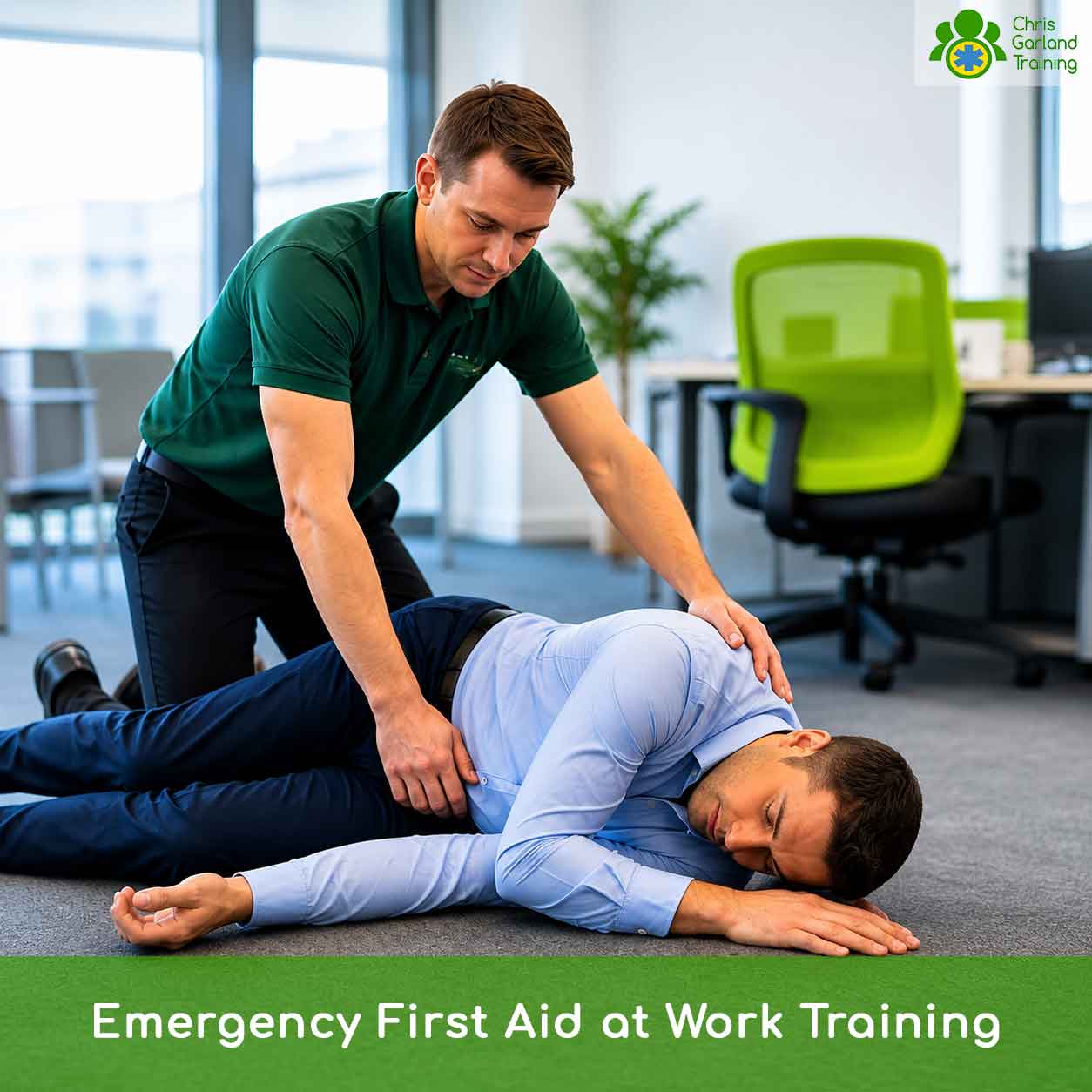
Emergency First Aid at Work (EFAW) | Face-to-Face Course
Under the Health and Safety (First Aid) Regulations 1981, every employer must ensure adequate first aid provision. Specifically, for low-hazard workplaces, the EFAW qualification meets that mandatory requirement. For example, these environments include standard offices, retail shops, public libraries, and creative studios. Therefore, businesses must maintain trained first aiders on site.
Consequently, catering and hospitality environments often combine this track with alternative safety certificates. For instance, you can explore our physical Level 2 Award in Food Safety (face to face) course. This comprehensive dual strategy helps you to maintain full commercial regulatory compliance seamlessly.
This one-day course focuses heavily on high-quality practical training. Specifically, it helps you to act effectively during critical emergencies. Consequently, your delegates leave with genuine confidence before emergency services arrive. Our specialised approach uses small cohorts to enhance learning. As a result, staff retain vital rescue procedures much better than on standard tick-box training tracks.
Alternatively, we provide this exact qualification through an interactive online path. Specifically, you can review our flexible Emergency First Aid at Work Course | Blended Learning option. This option helps you to save classroom time. However, this face-to-face option remains perfect for teams who prefer learning entirely in person.
What You Will Learn
Our comprehensive syllabus builds directly on the statutory HSE L74 guidelines. Furthermore, all core modules update in line with current UK Resuscitation Council protocols. Specifically, you can check our detailed comparison guide on RCUK Guidelines 2025 vs 2021: The Complete Guide for 2026 online. This training helps you to master these vital clinical fields:
- Legislation: Fulfilling statutory first aid laws and understanding individual employer or responder obligations safely.
- Incident Management: Evaluating unexpected scene hazards to prioritise casualties and manage emergencies effectively.
- Infection Control: Implementing sanitisation guidelines to prevent cross-infection while administering clinical care.
- Record Keeping: Logging accidental workplace incidents and tracking first aid treatments legally.
- Kit Operations: Reviewing regulatory first aid kit items and utilising safety assets properly.
- Unresponsive Casualties: Placing breathing casualties into the recovery position and checking vital responses.
- Life Support: Performing floor-level CPR and operating automated external defibrillators correctly.
- Cardiac Awareness: Identifying the critical physical differences between heart attacks and sudden cardiac arrest events.
- Choking Care: Managing severe upper airway blockages and clearing obstructions for adult casualties.
- Trauma Management: Treating external wounds, severe bleeding, catastrophic haemorrhages, and medical tourniquet applications.
- Minor Injuries: Administering quick treatments for minor cuts, grazes, bruises, splinters, and small burns.
- Acute Conditions: Recognising sudden epileptic or febrile seizures and managing physical shock symptoms.
Please note that we include professional tourniquet application directly in this syllabus. Specifically, this critical skill helps you to manage sudden catastrophic bleeding. Many alternative training providers omit this field entirely. However, we teach it comprehensively because national regulatory guidelines say we should.
Course Details and Assessment Framework
We structure our face-to-face day to balance intensive study with comfortable candidate breaks. Specifically, sessions run promptly from 9:00am until 5:00pm. We recommend arriving at 8:45am to complete your initial registration paperwork. In addition, please allow for potential minor overruns during the final afternoon assessment blocks.
- Duration: One full classroom day providing approximately seven guided learning hours plus breaks.
- Group Parameters: We require six candidates, capping strictly at twelve delegates per instructor.
- Testing Methods: Candidates must complete a theory paper (70%) and a practical drill (100%).
- Physical Capacity: Specifically, you must be physically capable of performing continuous CPR on the floor.
- Certification Pathways: Successful delegates receive a valid certificate active for exactly three years.
We schedule open courses regularly at our dedicated facility in Knutsford, Cheshire. Please view the booking selector above to review live dates, current availability, and pricing matrices. In addition, you can check exact morning start times there.
Certificate options
You can choose either a Chris Garland Training certificate (included) or an Ofqual-regulated QNUK certificate (additional £12.50 per person). Both are valid for insurance purposes. Some organisations and regulators prefer the Ofqual option.
Materials, assessment and the three-year validity period are the same either way. You select your preferred option when you book or request a quote.
HSE Compliance and Requalification Rules
National safety regulators enforce strict attendance tracking criteria for validation. Therefore, exceptional punctuality remains entirely mandatory. If you arrive more than fifteen minutes late, we must turn you away. Consequently, late arrivals immediately forfeit their course placement and all paid fees.
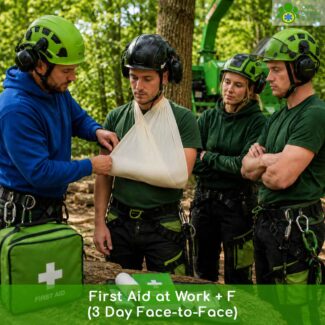
First Aid at Work coverage must be renewed before expiry to maintain continuous protection. Under current HSE parameters, a lapsed first aider becomes immediately non-compliant. Therefore, employers must schedule training in advance. Alternatively, look at our comprehensive three-day First Aid at Work course for higher-hazard environments.
Prerequisites and Language Guidelines
This course is suitable for anyone over sixteen assuming nominated first aider roles. Meanwhile, we welcome candidates aged fourteen to sixteen. They receive valid certificates upon passing but cannot act as sole responsible safety persons. We conduct all instructions and examinations strictly in English.
Therefore, delegates require a functional understanding of the language to take part. Specifically, we recommend a baseline of GCSE Grade D literacy. Furthermore, if you manage sports head trauma, consider reviewing active concussion rules. For example, read the latest UK Concussion Guidelines for Non-Elite (Grassroots) Sport protocols.
Venues and Private Corporate Bookings
Our open scheduled courses run at our modern training centre in Knutsford, Cheshire. Please explore our dedicated Joining Instructions page to check directions and parking details. Alternatively, our experienced team travels nationwide to deliver private group training directly at your venue.
We gladly adapt practical training scenarios to align with your internal company risk profiles. For teams of four or more, private on-site delivery provides excellent cost efficiency. Consequently, please complete our Corporate & Bespoke Training Quotations Form to request a customized pricing breakdown.
What Our Delegates Say
- “This course serves as an informative and useful tool, rather than a simple tick-box exercise.”
- “I thoroughly enjoyed the day. The presentation style was incredibly fun and informative.”
- “The environment felt completely non-intimidating, and the instructor delivered the modules brilliantly.”
- “I feel confident that I can help someone now. I am highly impressed by the extensive clinical knowledge.”
- “The delivery and scenario maps were so much better than standard Red Cross training options!”
Related Training and Compliance Guides
We provide multiple alternative training formats and legal safety updates to support your team workflows perfectly.
- Advanced Educators: Looking to update your teaching credentials? Book our specialised Basic Life Support Instructor Refresher course.
- HSE Obligations: Review employer responsibilities on the official Health & Safety Executive website.
- Social Accountability: Track our corporate local community contributions by reviewing our active Social Value Scorecard.
- Capacity Rules: Learn more about open course validation thresholds by visiting our Number of Participants legal page.
- Contact Details: Connect with our office directly to discuss multi-site staff profiles via the Contact Us portal.
- Course Frameworks: Not sure which qualification matches your corporate insurance requirements? Explore our helpful FAQ page.