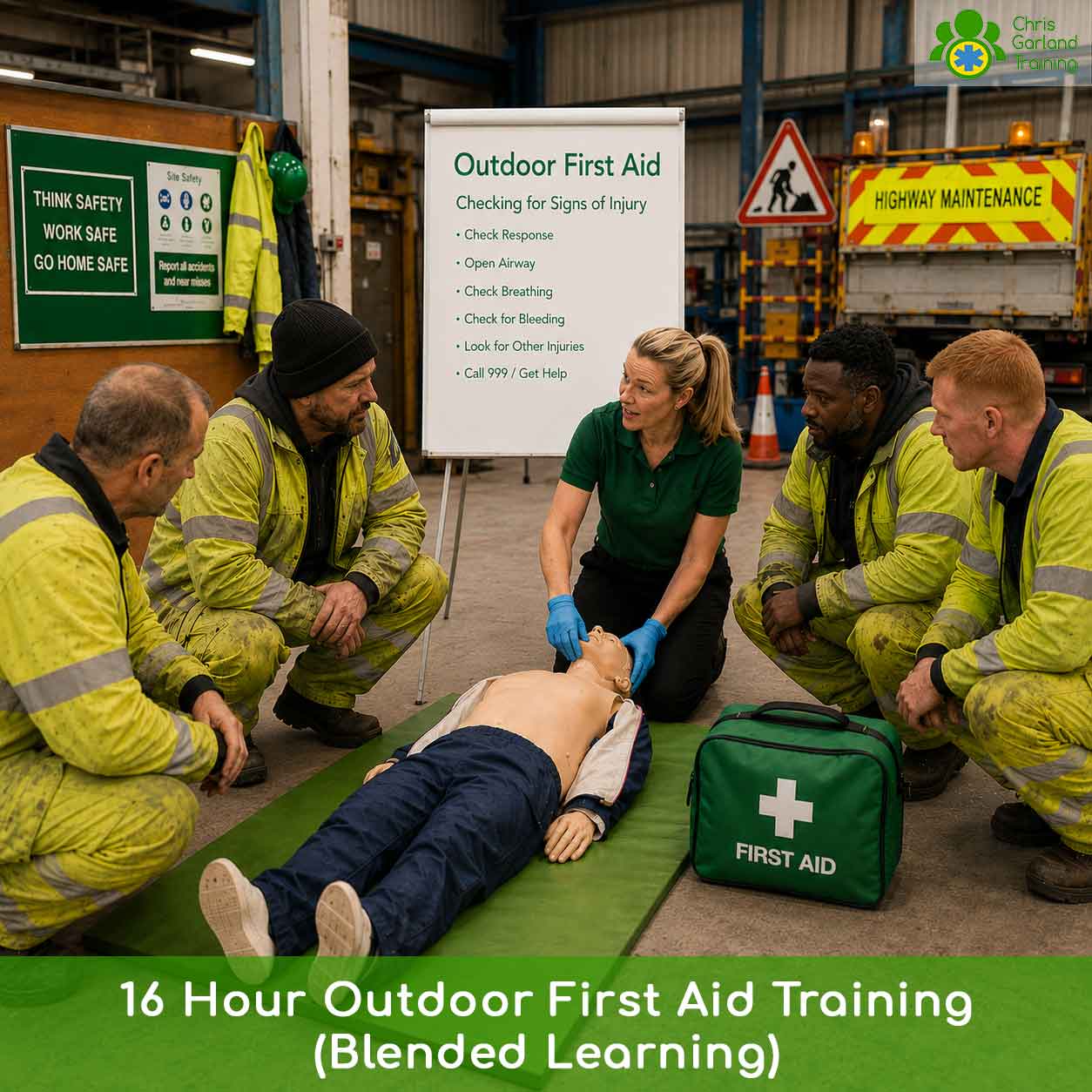
16-Hour Outdoor First Aid | Blended Learning Course
Outdoor environments present unique first aid challenges that standard qualifications fail to address completely. For instance, rough terrain and isolation create severe operational hazards. Equipment remains highly limited while response times fluctuate significantly. Therefore, casualties must be managed for extended periods before professional rescuers arrive. This specialised course bridges those critical safety gaps seamlessly.
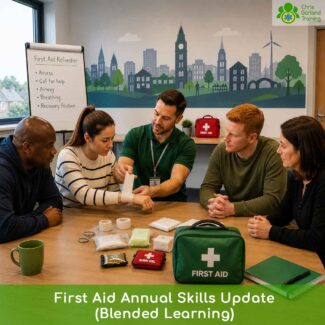
This blended format offers a smarter way to train. The flexible design splits the content perfectly between home study and practical drills. Specifically, moving theory online allows for shorter, more manageable classroom sessions. This configuration reduces field downtime without causing mental exhaustion. This framework perfectly suits mountain leaders, climbing instructors, and ski guides.
How the Blended Structure Works
The qualification splits cleanly to protect your energy levels and meet regulatory criteria. First, delegates complete four hours of self-paced digital pre-learning. You can dip in and out of the online portal fluidly. Second, students attend twelve hours of face-to-face practical training. We spread this classroom time across two shorter, highly collaborative days.
National Guidelines and QNUK Certification
National FAAOF guidelines mandate that a maximum of thirty percent of first aid training can be taught remotely. We strictly meet this standard by delivering twelve hours of the syllabus inside the classroom. Because we maintain this compliant structure, this blended course is fully approved for QNUK certification. Therefore, you can choose a fully regulated Ofqual qualification option during checkout.
What You Will Learn
Our comprehensive syllabus balances standard safety legislation with advanced wilderness medical protocols. For example, the course addresses these core fields:
Foundational Theory and Site Safety
- Legislation: Reviewing health and safety regulations alongside core first aider responsibilities.
- Incident Management: Gathering and utilising available equipment safely while preventing cross-infection risks.
- Record Keeping: Understanding the legal need for logging incidents and actions accurately.
- Environmental Contexts: Factoring in weather shifts, extreme terrain, isolation, and access challenges.
- Hardware Selection: Understanding required first aid kit contents tailored for remote environments.
Wilderness Life Support and Trauma Care
- Patient Surveys: Executing thorough primary and secondary casualty surveys for adult patients.
- Resuscitation Drills: Mastering cardiopulmonary resuscitation and automated external defibrillator operations on the floor.
- Syllabus Modifications: Adapting standard CPR for drowning, avalanche immersion, or lightning strike casualties.
- Circulatory Crises: Spotting the clinical differences between heart attacks and sudden cardiac arrests.
- Airway Obstructions: Responding to choking incidents safely and effectively in the field.
- Trauma Management: Treating physical wounds, severe external bleeding, fractures, and bone dislocations.
- Internal Injuries: Caring for suspected head, spinal, chest, abdominal, and pelvic trauma.
- Medical Emergencies: Managing active seizures, strokes, asthma attacks, diabetes, and anaphylactic shock.
- Outdoor Pathogens: Treating UK wildlife bites, stings, and recognising early Lyme disease signs.
- Thermal Stress: Treating the dangerous physical effects of extreme heat or profound hypothermia.
Prerequisites and Physical Demands
Candidates must be physically capable of performing floor-level cardiopulmonary resuscitation techniques to pass. Specifically, you will demonstrate rescue procedures on a training manikin on the floor. No previous first aid experience is required. We cover all necessary foundational knowledge comprehensively during your online pre-learning module.
We conduct all instructions and technical assessment materials strictly in English. Therefore, we recommend a basic level 2 literacy standard for all delegates. This qualification suits anyone aged 16 or older. Younger candidates aged 14 to 16 may attend safely. However, employers must not rely on them as sole workplace first aiders.
Testing and Certification Pathways
We verify student competence through progressive digital and physical validation checks. First, you must score a minimum of eighty percent during online knowledge quizzes. You receive several attempts to pass this stage. Next, you complete a multiple-choice paper in class, requiring a seventy percent score. Finally, classroom practical observation requires a perfect hundred percent pass mark.
We provide two valid certification routes to satisfy your company compliance policies perfectly. You can choose our standard Chris Garland Training digital PDF certificate. Alternatively, select the Ofqual-regulated QNUK qualification for an additional processing fee. Both paths remain active for exactly three years.
Punctuality and Group Capacities
We enforce strict contact-time criteria for outdoor first aid certificates. Therefore, exceptional punctuality is mandatory for all registered students. If you arrive more than fifteen minutes late, we must turn you away. Consequently, late arrivals forfeit their course placement and all paid booking fees.
We strictly cap learning cohorts at twelve candidates per qualified instructor. Scheduled public courses require a minimum of four delegates to run successfully. Please complete our online quote request tool to arrange private group training at your premises.
Related Training and Compliance Guides
We provide multiple alternative training formats and legal safety updates to support your team workflows perfectly.
- Classroom Option: Prefer full face-to-face classroom hours? View our completely classroom-based 16-Hour Outdoor First Aid Course.
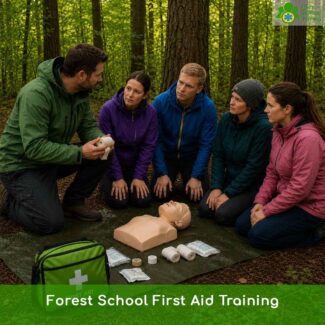
- Child Settings: For outdoor learning environments with young people, view our Forest School First Aid (Face-to-Face) framework.
- Flexible Education: Working with children outdoors? Review our Forest School First Aid (Blended Learning) pathway.
- Core Forestry: Working high-risk woodland tasks on Forestry England land? Book our full First Aid at Work Course +F (FAW+F) | Face-to-Face track.
- Lower Risk Forestry: For general outdoor supervision roles, explore our Emergency First Aid at Work +F session.
- Kit Requirements: Check your hardware equipment compliance against the Is Your Workplace Compliant with the BS 8599-1:2026 First Aid Standard? guide.