16-Hour Outdoor First Aid Course | 2-Day Face-to-Face
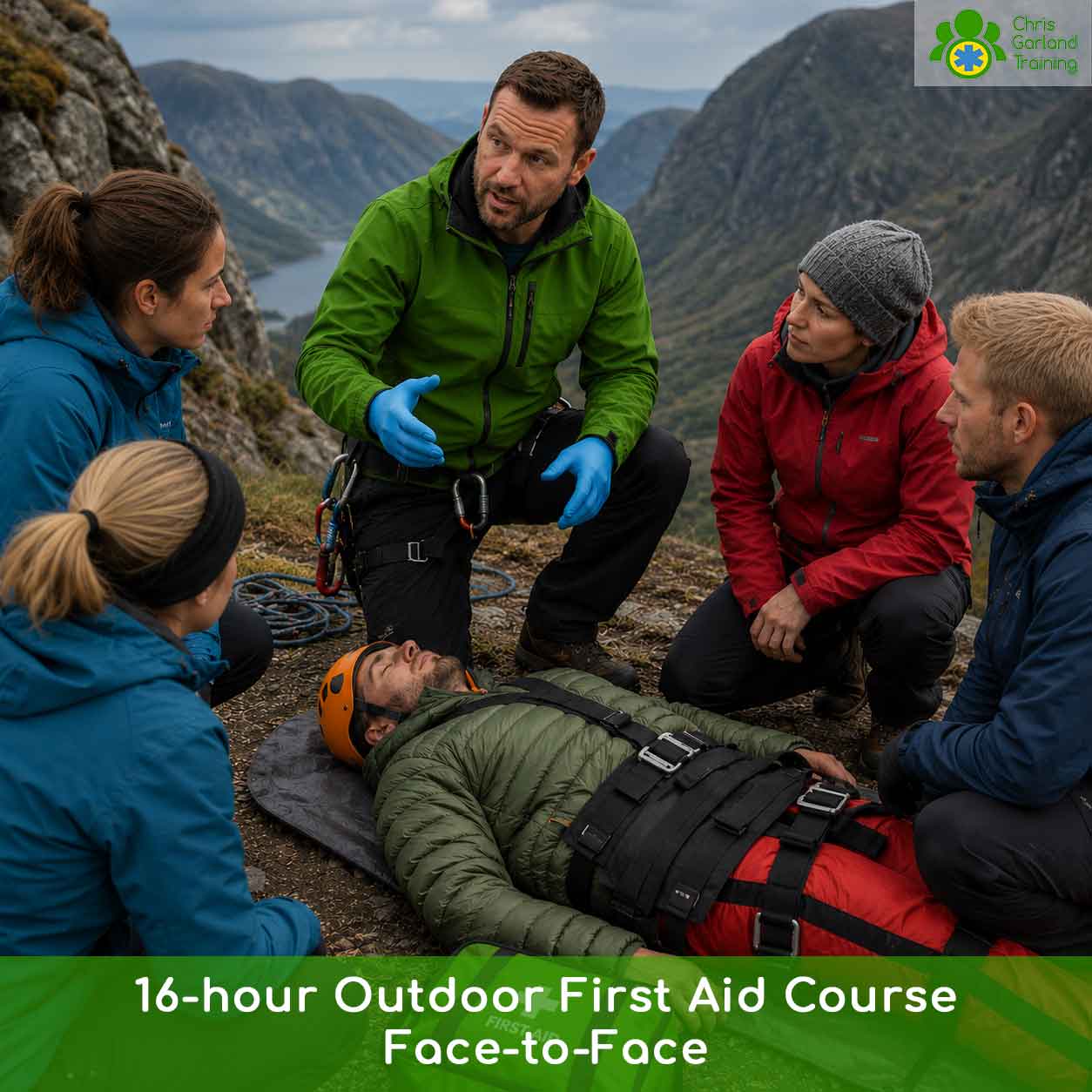
Outdoor environments present unique first aid challenges that standard workplace qualifications fail to address completely. For instance, rough terrain and isolation create severe operational hazards.
In addition, equipment remains highly limited while response times fluctuate significantly. Therefore, casualties must be managed for extended periods before professional rescuers arrive. Consequently, this specialised course bridges those critical safety gaps seamlessly.
Specifically, the intensive curriculum targets wilderness injuries including falls from height, hypothermia, and severe crush trauma. However, standard health and safety first aid courses are simply not designed to cover these remote scenarios.
Therefore, this qualification provides essential skills for anyone spending extended time outdoors. As a result, it perfectly suits recreational explorers, voluntary rescue workers, and commercial field teams.
Please note this specific course focuses entirely on adult casualties aged 18 and older. Meanwhile, are you a forest school leader working with infants or young people?
If so, we strongly recommend our dedicated child-focused outdoor learning tracks instead. Furthermore, those specialised programmes include paediatric assessments and child resuscitation drills.
What You Will Learn
The course syllabus balances standard workplace health regulations with outdoor and remote area protocols. For example, the course addresses these core fields:
Core Roles and Environmental Management
- Legislation: Reviewing health and safety regulations relating directly to first aid and outdoor activities.
- Outdoor Contexts: Understanding how the duties of an outdoor first-aider differ from standard workplace roles.
- Environmental Risks: Managing challenging environmental factors including weather shifts, rough terrain, and high altitude.
- Wilderness Hardware: Selecting, packing, and maintaining specialised first aid kits for remote environments.
- Casualty Movement: Learning precisely when and how to move an injured person safely outdoors.
- Extended Care: Managing unresponsive casualties when professional emergency assistance is up to two hours away.
Assessment and Life-Threatening Crises
- Survey Frameworks: Implementing thorough primary and secondary casualty surveys for adult patients.
- Dynamic Assessments: Executing proactive scene safety management and ongoing risk assessments in real time.
- Remote Calling: Navigating poor mobile coverage and utilising specialised emergency numbers to summon assistance.
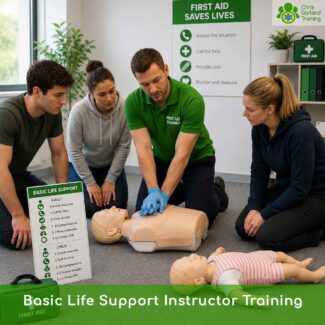
- Resuscitation Tweaks: Modifying standard CPR and AED operations for cold, wet, or freezing conditions.
- Drowning Responses: Mastering immediate water immersion rescue steps and modified drowning resuscitation protocols.
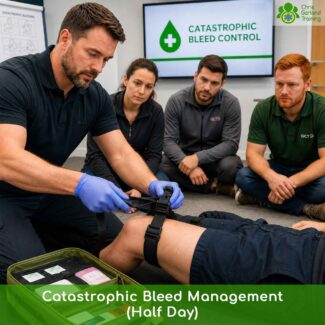
- Haemorrhage Control: Deploying professional tourniquets and executing manual wound packing for catastrophic bleeding.
- Anaphylaxis Care: Recognising severe allergic reactions and operating adrenaline auto-injectors safely on site.
Environmental Trauma and Medical Conditions
- Thermal Stress: Recognising, treating, and preventing profound hypothermia, heat exhaustion, and acute heatstroke.
- Lightning Strikes: Administering unique modified cardiopulmonary resuscitation procedures for lightning strike casualties.
- Bites and Stings: Managing native UK wildlife hazards including adder snake bites safely.
- Skeletal Traumas: Managing fractures, bone dislocations, and applying improvised field splinting techniques.
- Internal Injuries: Treating acute chest punctures, suspected pneumothorax, and severe head or spinal trauma.
Course Duration and Structure
This comprehensive face-to-face programme delivers sixteen guided learning hours. Generally, our intensive classroom and field sessions run from 9am to 6pm each day.
Additionally, the training framework incorporates four hours of mandatory self-study. Consequently, this combined structure ensures you master advanced outdoor rescue procedures thoroughly.
Mandatory Pre-Course Study Details (4 Hours)
Candidates receive their physical training manuals on day one of the course. Therefore, you must complete your four hours of pre-study digitally before arriving.
Specifically, we recommend utilising high-quality UK outdoor safety videos to prepare. As a result, this visual preparation builds vital baseline knowledge before your practical sessions.
Please explore established, highly respected UK outdoor training channels on YouTube. For instance, excellent video libraries are provided by these organisations:
- Glenmore Lodge: Scotland’s National Outdoor Training Centre offers brilliant wilderness medicine playlists.
- The British Mountaineering Council: The BMC channel features concise remote emergency calling guides.
- Plas y Brenin: The National Outdoor Centre produces excellent clips focusing on dynamic terrain risks.
To study effectively, search for these exact phrases on YouTube before day one:
- Outdoor First Aid Primary Survey UK
- Wilderness hypothermia management protocols
- Drowning resuscitation protocols Resuscitation Council UK
- Improvised splinting for fractures outdoor first aid
Prerequisites and Physical Demands
Candidates must be physically capable of performing floor-level cardiopulmonary resuscitation techniques to pass. Specifically, you will demonstrate rescue procedures on a training manikin on the floor.
Meanwhile, we conduct all instructions and assessment papers strictly in English. Therefore, we recommend a basic level 1 literacy baseline for all delegates.
Testing and Certification Pathways
We verify student competence through two distinct components at our Knutsford facility. First, you will complete a standard multiple-choice theory exam paper.
Candidates require a minimum score of 70% to pass the exam. Second, continuous practical observations demand a perfect 100% pass mark.
Furthermore, we provide two valid certification pathways to satisfy your organisational policies perfectly. For example, you can choose our standard Chris Garland Training digital PDF certificate.
Alternatively, select the Ofqual-regulated qualification option using the radio buttons above. Specifically, this regulatory pathway issues a paper certificate and a plastic verification card. Both options remain valid for exactly three years.
Punctuality and Group Capacities
Awarding bodies enforce strict contact-time criteria for outdoor first aid certificates. Therefore, exceptional punctuality is mandatory on all training days.
Candidates arriving more than 15 minutes late will be turned away immediately. Consequently, late arrivals forfeit their course placement and all paid fees.
Meanwhile, we strictly cap learning cohorts at twelve candidates per qualified instructor. Additionally, scheduled public courses require a minimum of four delegates to run successfully. Please complete our online quote request tool to arrange private group sessions.
Related Training and Compliance Guides
We provide multiple alternative training formats and legal safety updates to support your team workflows perfectly.
- Child Settings: For outdoor learning environments with young people, view our Forest School First Aid (Face-to-Face) framework.
- Flexible Education: Balance your schedule with our Forest School First Aid (Blended Learning) pathway.
- Core Forestry: Working high-risk woodland tasks on Forestry England land? Book our full First Aid at Work Course +F (FAW+F) | Face-to-Face track.
- Lower Risk Forestry: For general outdoor supervision roles, explore our Emergency First Aid at Work +F session.
- Workplace Basics: For standard lower-hazard industrial sites, check out our baseline Emergency First Aid at Work course.
- Advanced Commercial: For comprehensive high-hazard corporate properties, see our full First Aid at Work programme.
- Defibrillator Compliance: Learn about workplace resuscitation rules by reading Are Defibrillators a Legal Requirement for UK Businesses? online.