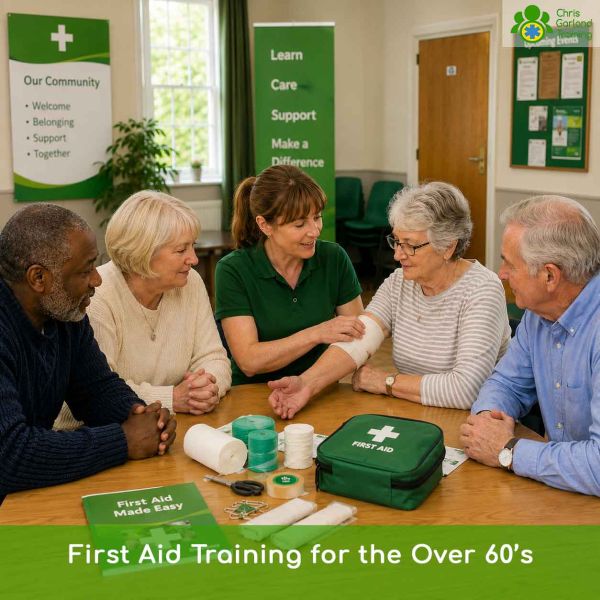
First Aid for the Over 60’s | Face-to-Face Course
Ageing naturally impacts our physical capabilities over time. Specifically, our skin grows thinner and tears more easily. Furthermore, knees and hips might not work as smoothly as they used to. Therefore, this four-hour course provides the perfect way to refresh your vital first aid and self-care knowledge.
Managing home emergencies requires selecting proper equipment setups beforehand. For instance, read our guidance on Which First Aid Kit Do I Need? to audit your supplies. Consequently, executing a proper personal audit helps you to select correct safety strategies. For instance, read our guide to The First Aid Needs Assessment online.
Course Syllabus
Our practical syllabus addresses everyday household safety hazards systematically. Specifically, the modules cover these important fields:
1. General Safety and Mobility
- Accident Prevention: Identifying and removing common slips and trip hazards around your home environment.
- Medical Kits: Organising essential first aid contents for home storage and outdoor travel.
- Fall Management: Learning safe physical strategies to get up safely after experiencing a fall.
- Symptom Checking: Differentiating between standard attention-seeking indicators and severe underlying medical emergencies.
- Thermal Regulation: Recognising and treating hypothermia signs in cold residential settings.
2. Neurological and Cardiac Conditions
- Head Hazards: Identifying acute epileptic seizures and executing immediate patient protection workflows safely.
- Stroke Response: Recognising sudden stroke symptoms quickly using standard medical stroke assessment criteria.
- Cardiac Events: Mastering the critical differences between a heart attack and sudden cardiac arrest. Additionally, gender variances exist in resuscitation research. For instance, read Women are less likely to survive a cardiac arrest online.
- Life Support: Learning to provide manual CPR and deploy an automated defibrillator safely.
3. Circulatory, Respiratory, and Structural Care
- Blood Pressure: Managing positional changes safely when getting out of bed to prevent fainting.
- Shock Protocols: Treating physical shock states and placing unresponsive casualties into the recovery position.
- Airway Obstructions: Delivering rapid, decisive choking responses to clear airway passages.
- Skin Integrity: Managing deep bruising, skin tears, grazes, cuts, and minor household scalds.
- Skeletal Injury: Identifying broken bones and stabilising suspected limb fractures carefully.
Course Details and Assessment Framework
We deliver this interactive community curriculum through supportive face-to-face classroom guidance.
- Duration: Provides four hours of immersive face-to-face training without an exam.
- Daily Schedule: Daily classroom modules run promptly from 9:00am until 1:00pm.
- Testing Rules: Instructors verify your practical skills through supportive floor-level CPR observations.
- Certification: Graduates receive an official electronic Chris Garland Training certificate valid for three years.
Prerequisites and Safety Candidate Caps
Our supportive course remains completely open to anyone aged privatisation sixteen or over. Crucially, you do not require any prior first aid experience to enrol. However, we recommend a baseline guideline background of GCSE Grade D literacy. Meanwhile, participants must be physically capable of demonstrating procedures on the floor to qualify.
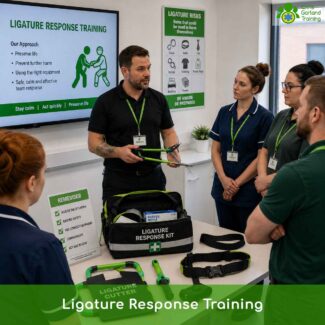
Similarly, maintaining excellent hygiene standards at home helps to prevent secondary medical issues. Specifically, you can study our online Introduction to Infection Control | E-Learning module. Furthermore, community care leaders often balance home support with advanced secure safety tracks. For example, view our specialised Ligature Response Training track.
Scheduled public sessions require a minimum of four candidates to run successfully. Meanwhile, we restrict maximum capacities strictly to twelve delegates per qualified instructor. This structural framework helps you to receive high-quality personal guidance from our team.
Venues and Private Group Bookings
Our open courses run regularly at our modern facility in Knutsford, Cheshire. Please explore our dedicated Joining Instructions page to check directions before arrival. Alternatively, we travel nationwide to deliver private sessions for community groups.
In addition, household protection involves managing environmental hazards like smoke and electrical faults. Therefore, you can explore our advice on Fire Safety at Home right now. Furthermore, we remain dedicated to sustainable local education models. Consequently, please complete our Corporate & Bespoke Training Quotations Form to request a customised quote.
Related Training and Compliance Guides
We provide multiple alternative safety frameworks and educational reference guides to support your community perfectly.
- Course Selection: Not sure which awareness track matches your personal lifestyle? Read our detailed FAQ page.
- Audit Guidelines: Review workplace regulatory preparation frameworks by tracking The First Aid Needs Assessment online.
- Domestic Protection: Learn crucial household safety management steps by reading Fire Safety at Home online.
- Hygiene Frameworks: Access flexible sanitisation compliance modules via the Introduction to Infection Control | E-Learning portal.
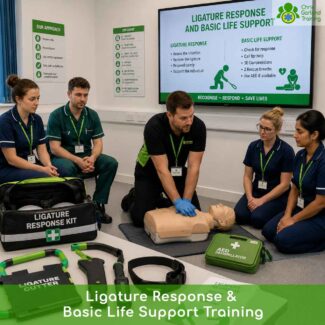
- Secure Environments: Review advanced institutional safety workflows on our Ligature Response Training description page.
- Resuscitation Research: Study critical healthcare survival factors by reading Women are less likely to survive a cardiac arrest right now.
- Medical Equipment: Audit your household diagnostic setups by checking Which First Aid Kit Do I Need? online.
- Safety Limits: Learn more about open session activation thresholds by visiting our Number of Participants legal page.