At A Glance:
TL;DR: The 4Cs of Food Safety at a Glance
In a hurry? Here is the executive summary for quick compliance reference:
- Cleaning: Stop the spread of pathogens through rigid hand hygiene, clean-as-you-go practices, and strict adherence to chemical contact times. Use color-coded tools and purple allergen-free equipment to avoid cross-contact.
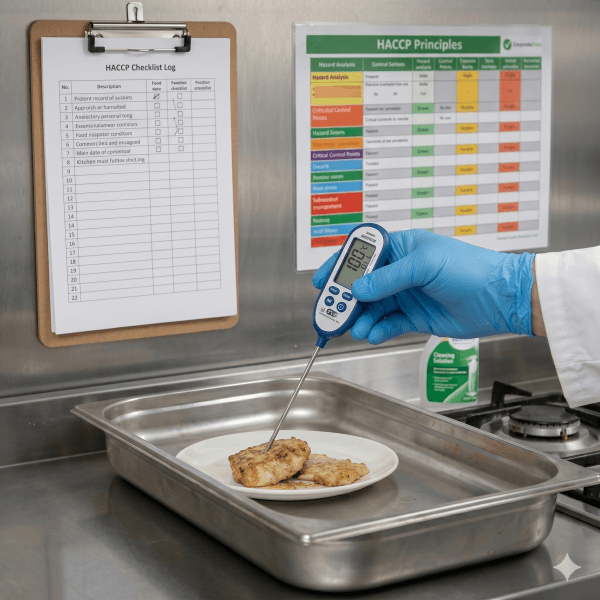
- Cooking: Destroy bacteria by ensuring core food temperatures reach 70°C for 2 minutes or 75°C for 30 seconds. Maintain hot-holding displays at 63°C or above.
- Chilling: Suppress bacterial growth by keeping commercial fridges between 2°C and 3°C (strictly below 5°C). Ensure hot food is cooled and refrigerated within 2 hours.
- Cross-Contamination: Eliminate direct and indirect pathogen transfer by using dedicated preparation zones and keeping raw meats stored at the bottom of refrigeration units, completely separate from ready-to-eat items.
Need accredited training for your team? Explore upcoming dates in our course catalogue or request a rapid group rate via our corporate quotation page.
Whether you manage an established commercial kitchen, oversee food manufacturing operations, or are expanding your team’s hospitality credentials, strict compliance with food safety is vital. Fortunately, a simple, universally effective framework for understanding and implementing the foundational pillars of food hygiene is The 4Cs.
Essentially, the 4Cs serve as a strategic line of defense to eliminate the most common food safety hazards in commercial operations:You can use the 4Cs to prevent the most common food safety problems, they are:
- Cleaning
- Cooking
- Chilling
- Cross-contamination
Let’s examine how each pillar applies to your workplace compliance.
Table of contents
1. Cleaning
Establishing an exact cleaning regime is paramount. However, cleaning incorrectly can introduce chemical or biological hazards into your workspace.
Hand Hygiene: Always wash hands thoroughly before handling food. Additionally, universally mandate handwashing between handling raw ingredients (such as poultry, raw meat, or eggs) and cooked or ready-to-eat items.
Clean-As-You-Go: Prevent soil and grease buildup by cleaning surfaces and sanitising utensils immediately after completing a specific task.
Chemical Management: Use detergents and disinfectants correctly. Note that standard detergents disperse grease but do not kill pathogens. Therefore, ensure your team understands the specific contact times and precise dilution rates required for antimicrobial disinfectants to work effectively
Avoid Chlorine Contamination: Bleach should be excluded from food preparation surfaces due to the risk of chlorine compound breakdown. Instead, utilise industry-standard sterilising fluids or dual-action sanitisers (such as Suma-bac D10), which combine grease dispersal with deep microbial reduction.
Equipment Colour Coding: Standardise your cleaning equipment to eliminate the spread of germs. For instance, cleaning tools used in rest facilities must never enter a kitchen environment.
Allergen Isolation: Ensure your kitchen utilises designated allergen-free equipment (often color-coded purple, such as dedicated knives and chopping boards). As a result, you will eliminate cross-contact for clients with severe food allergies and intolerances.
Structured Cleaning Schedules: Finally, implement a clear cleaning schedule tailored to your operational output. Your compliance log should clearly define tasks across these specific intervals:
- Before starting work
- During the operational day
- At the end of the day
- Weekly
- Monthly

2. Cooking
Thorough cooking completely destroys harmful bacteria, thereby preventing dangerous outbreaks of foodborne illness.
Critical Core Temperatures: For poultry, pork, minced meat products, and rolled joints, ensure the food is heated thoroughly through to its centre. Specifically, best practice dictates that the core temperature must reach 70°C for at least 2 minutes, or 75°C for 30 seconds. Juices must always run completely clear.
Hot Holding Compliance: When maintaining cooked food on a hot buffet or pass, it must be held at a continuous temperature of 63°C or above. If the temperature drops below this threshold and cannot be corrected, the food must be safely discarded after a maximum of 2 hours.
Reheating Regulations: Reheating should strictly occur only once. The food must reach the core standard of 70°C for 2 minutes throughout to ensure it is piping hot, and it must be served immediately.
3. Chilling
Chilling effectively slows the growth of pathogenic bacteria, keeping ingredients fresh and compliant for longer periods. Consequently, operations must rigorously maintain these low temperatures.
- Safe Cooling Protocols: Never place piping hot food directly into a commercial refrigerator or freezer, as this raises the ambient temperature of the unit. Instead, cool items quickly, ideally dividing them into smaller portions or using ice water baths and ensure they are moved into cold storage within a maximum of 2 hours.
- Chamber Temperatures: Commercial refrigerators must remain below 5°C at all times, with optimal operational practice targeting 2°C to 3°C. Monitor and log these temperatures regularly, keeping doors closed to prevent internal warming.
- Ambient Display Limits: Once chilled food is removed from refrigeration for display or preparation, it must not remain at room temperature for longer than 4 hours. Beyond this limit, the food becomes non-compliant and must be discarded.
- Freezer Management: Place items designated for freezing directly into the unit to prevent partial thawing. Always freeze food at least 24 hours before its “use-by” date, ensuring the packaging is clearly labeled with the date of freezing.
4. Cross-Contamination
Cross-contamination occurs when pathogens are transferred from raw ingredients or contaminated surfaces onto ready-to-eat food. It must be prevented at all costs.
- Visual Controls: Mandate distinct colour-coded preparation boards and utensils for raw meats, vegetables, cooked meats, salad items, and fish.
- Operational Segregation: Where structural layouts permit, maintain entirely separate preparation and storage areas for raw and cooked items.
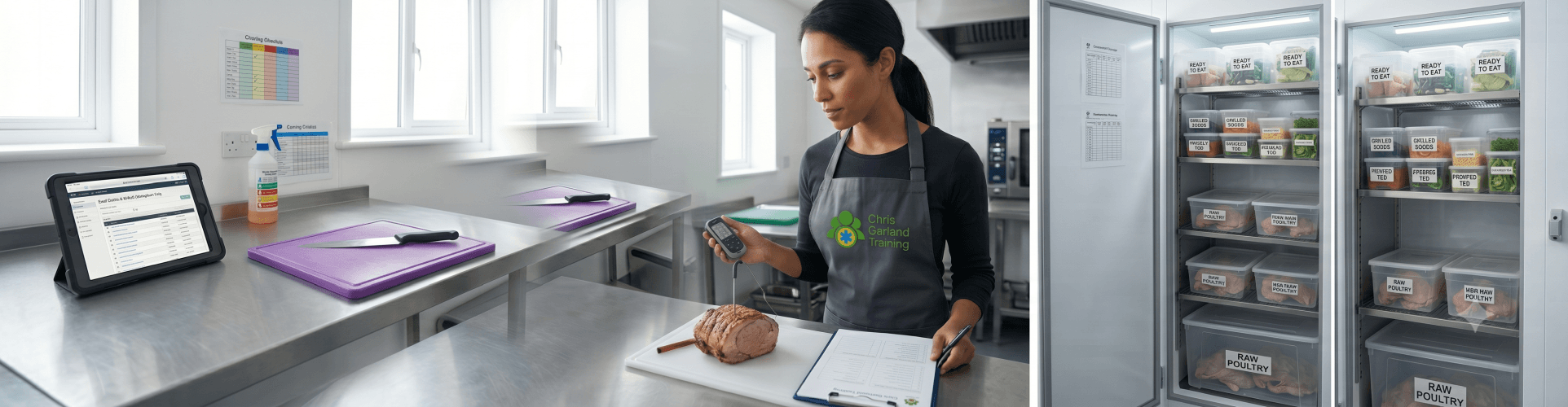
- Storage Hierarchy: Never store raw meat, poultry, or unwashed seafood above ready-to-eat items or fresh produce. Keep them completely separated, ideally utilising entirely separate refrigeration units.
By embedding the 4Cs of food hygiene into your daily operational culture, you drastically reduce the risk of biological contamination. When combined with a robust HACCP (Hazard Analysis Critical Control Point) methodology, these controls form an unshakeable framework for corporate food safety compliance.
Food Safety Training
Accredited Food Safety Training
At Chris Garland Training, we provide a comprehensive suite of accredited Food Safety qualifications tailored for businesses and individual professional development:
- Level 1: Food Hygiene Essentials
- Level 2: Award in Food Safety (Available via interactive face-to-face or remote E-Learning formats)
- Level 3: Award in Supervising Food Safety (For team leads, head chefs, and kitchen managers)
Whether you need to secure compliance for a corporate team or choose the optimal path for your specific operations, we are here to assist.
Explore our upcoming dates in the course catalogue, request a tailored group rate via our corporate quotation page, or email our team directly at [email protected] to enquire about your team’s training.
Note: The information provided in this article serves as an educational overview and should not replace formal, accredited Food Safety certification.