Statutory Compliance & Official Guidance
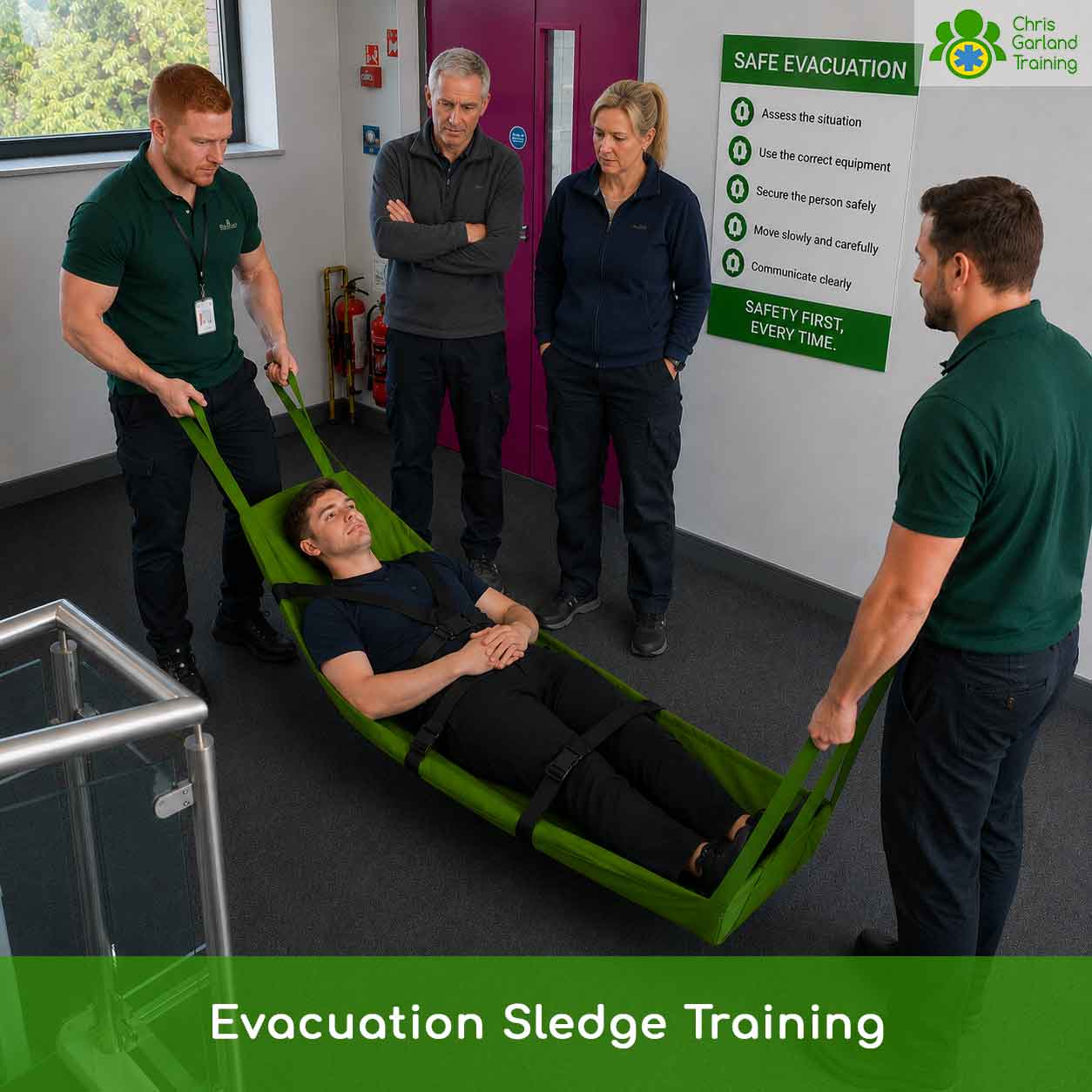
Evacuation sledges and ski-sheets are essential safety tools in multi-storey care facilities, schools, and hospitals. Specifically, they are critical where standard evacuation chairs are impractical. Where this equipment is installed, staff operator training is a statutory legal requirement under PUWER 1998 regulations. This practical course ensures your team can deploy these life-safety assets safely and confidently during an emergency evacuation.
Official UK Government guidance states that evacuation equipment training must include three core elements. Specifically, it must cover disability awareness, disability evacuation etiquette, and practical manual handling techniques. Training your team ensures your workplace meets its legal duty of care under the Regulatory Reform (Fire Safety) Order 2005.
To understand your facility’s explicit structural obligations thoroughly, check our Expert Guide: Your new fire safety risk assessment requires evacuation chairs. In addition, you can read our comprehensive analysis of emergency safety gear options by reviewing A Closer Look at Evacuation Sledges, Mats & Pads: Features, Benefits, and Best Practices.
What You Will Learn
- Legal Frameworks & Guidance: Reviewing employer duties under PUWER 1998, fire safety orders, and building exit strategies.
- Disability & Evacuation Etiquette: Understanding physical dependencies, managing clear communication, protecting passenger dignity, and reducing casualty panic.
- Bed-to-Floor Transfer Mechanics: Mastering manual handling techniques to get an evacuee safely from a hospital bed and onto the floor using ski-sheets, AirFlow units, or standard sledges.
- Safe Manual Handling on Stairs: Mastering practical sliding mechanics down stairs to ensure operator safety and passenger protection.
- Pre-Use Equipment Inspections: Spotting material wear and tear, evaluating deployment readiness, and understanding annual maintenance requirements.
“Made the course interesting & engaging. Thank you very much! (Sledge only became scary when I participated!). My biggest takes away is the amount of legislation to be aware of.”
Course Details
- Format: Face-to-face practical instruction with integrated lunch and comfort breaks
- Duration: One single day running promptly from 9:00am to 3:00pm (5 guided learning hours)
- Accreditation: Fully compliant with PUWER 1998 statutory mandates and the Regulatory Reform (Fire Safety) Order 2005
- Assessment: Multiple-choice theory paper (70% pass mark) and a continuous 100% practical operational evaluation
- Certificate: Formal digital certificate issued immediately upon successful completion
Certificate
This course is certified by Chris Garland Training. The certificate is valid for three years and is accepted for insurance purposes. Materials and assessment standards are the same as our accredited courses.
Course Access & Requirements
- Physical Fitness Limits: Operating evacuation sledges requires a reasonable baseline of physical fitness and strength. This course involves strenuous physical work on stairs and floor transfers. Therefore, it is not suitable for individuals with active back or shoulder injuries, hernias, or mobility limitations.
- Required Attire: All candidates must wear comfortable clothing (such as trousers) and flat, closed-toe shoes with non-slip soles. High heels, open sandals, or skirts will result in immediate exclusion from practical tracks due to slip hazards.
- Age & Language: Attendees must be at least 18 years old to earn an operator certificate. In addition, candidates need a functional level of English to take the written paper.
- Late Arrival Policy: Strict health and safety compliance standards enforce uncompromising contact-time criteria. Candidates must absorb every theoretical safety module to participate in the practical staircase drills. Consequently, if an attendee arrives more than 15 minutes late for the morning start time, they will be turned away and forfeit their booking fees.
Useful Links & Resources
- Read our full Course Joining Instructions
- Request a group quote via our Bespoke Corporate Quotations portal
- Care Home Evacuation Compliance Case Study
Related Courses
- For Internal Trainers: To build an internal instruction network across a multi-site estate, pair this track with our advanced Evacuation Sledge Train the Trainer.
- For Social Care Support Teams: If your support teams operate within clinical or residential environments, protect your operational standards with our CPD-approved Learning Disability Awareness | E-Learning.
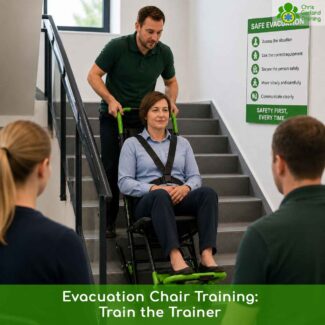
- For Alternative Equipment: If your risk assessment specifies seated mechanical stair equipment instead of sledges, view our online Evacuation Chair Training.