First Aid at Work (FAW) | Face-to-Face Course
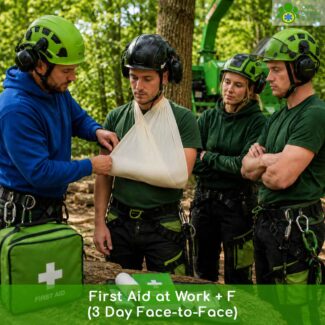
The statutory First Aid at Work (FAW) qualification covers everything in the basic EFAW framework and considerably more. Specifically, it represents the appropriate baseline standard for higher-hazard workplaces. For example, these environments include engineering, manufacturing, and food processing operations.
Consequently, food managers often pair this tracking with our Level 2 Award in Food Safety (face to face) course. In addition, construction sites, warehousing operations, and professional care settings require this advanced level of protection.
It also suits workplaces with larger workforces. Therefore, it fits any environment where potential injuries go beyond basic emergency first aid limits.
Three consecutive days represent a significant investment of time for corporate operations. However, this runtime is the absolute minimum specified by the HSE for full validation. Specifically, the complex subject matter demands deep practical instruction to ensure true competence.
Consequently, delegates who complete this course leave with excellent clinical knowledge. In addition, they gain the functional confidence to manage a broad range of medical emergencies competently.
What You Will Learn
Our comprehensive syllabus builds upon baseline life support concepts. Specifically, the advanced modules focus heavily on realistic field scenarios across multiple clinical areas:
- Skeletal Trauma: Managing complex fractures safely alongside suspected spinal injuries.
- Chest Trauma: Treating severe chest injuries including pneumothorax, haemothorax, and rib fractures.
- Specialised Injuries: Handling delicate eye injuries and acute abdominal trauma safely.
- Neurological Events: Evaluating head injuries and monitoring changing levels of consciousness.
- Medical Conditions: Assessing acute conditions including angina, heart attacks, strokes, and asthma.
- Systemic Illnesses: Managing severe epileptic seizures, anaphylaxis triggers, diabetic emergencies, and poisoning.
- Incident Management: Prioritising multiple casualties using standard triage principles under pressure.
- Resource Management: Maintaining compliance first aid kits and reviewing whether Are Defibrillators a Legal Requirement for UK Businesses? for your sector.
Course Details and Assessment Framework
We deliver this extensive curriculum through immersive face-to-face interaction. Alternatively, you can view our interactive blended learning equivalent track to save classroom time. Both formats deliver the exact same qualification.
- Duration: The course provides eighteen guided learning hours split across three consecutive days.
- Daily Schedule: Classroom modules run promptly from 9:00am until 5:00pm each day.
- Testing Rules: Candidates must pass a multiple-choice paper (70%) and practical observations (100%).
- Physical Demands: Specifically, you must be physically capable of performing continuous CPR on the floor.
- Certification: Certificates remain valid for three years from your formal issue date.
We schedule open courses regularly at our dedicated facility in Knutsford, Cheshire. Please view the booking selector above to review live dates, current availability, and pricing matrices. In addition, you can check exact morning start times there.
HSE Compliance and Punctuality Rules
Regulators enforce strict contact-time criteria to validate these statutory certificates. Therefore, exceptional punctuality remains completely mandatory for every candidate. If you arrive more than fifteen minutes late for any day, we must turn you away. Consequently, late candidates immediately forfeit their place and all paid booking fees.
First Aid at Work certificates remain legally active for exactly three years. Therefore, requalification training must take place before your current coverage expires. A lapsed first aider is no longer considered legally compliant. Consequently, employers cannot count them on their workplace safety profiles.
Our specialised 2-day FAW Requalification course is open to those training within thirty days of expiry. However, if your certificate lapses past this thirty-day window, you face strict regulatory limits. Specifically, you must retake this full three-day course to restore compliance.
Prerequisites and Group Parameters
This qualification is suitable for anyone aged sixteen or older assuming nominated first aider roles. Meanwhile, candidates aged fourteen to sixteen can also earn a valid certificate. However, employers cannot rely on them as a sole nominated workplace first aider.
We recommend a baseline guideline background of GCSE Level 2 literacy for all technical materials. In addition, we conduct all assessments strictly in English. Please contact our administrative office before booking to discuss arranging any necessary reasonable adjustments.
Open scheduled courses require a minimum of six candidates to run under HSE rules. Meanwhile, health and safety regulations limit cohort sizes to twelve delegates per instructor. This configuration helps you to guarantee high-quality feedback during practical drills.
Venues and Private Corporate Bookings
Our open courses run regularly at our modern training centre in Knutsford, Cheshire. Please explore our dedicated Joining Instructions page to review dress codes and local parking information.
Alternatively, our experienced instructors travel nationwide to deliver private training directly at your venue. We gladly adapt our practical scenarios to align with your internal risk assessments. Consequently, please complete our Corporate & Bespoke Training Quotations Form to request a private group quotation.
Related Training and Compliance Guides
We provide multiple alternative training formats and legal safety updates to support your team workflows perfectly.
- Lower-Risk Roles: Supervising a lower-hazard workspace? Book our 1-day Emergency First Aid at Work | Face-to-Face course.
- Outdoor Learning: Operating a wilderness or rural education facility? Explore our Forest School First Aid | Face-to-Face programme.
- Refresher Tracks: Keep your skills sharp between certifications by exploring our annual refresher training options.
- Social Accountability: Track our corporate local community contributions by reviewing our active Social Value Scorecard.
- Course Selection: Not sure which qualification matches your corporate framework? Read our detailed Workplace Compliance & Training FAQ.
- Legal Info: Learn more about open course validation thresholds by visiting our Number of Participants legal page.