Wound Closure Course | Half Day
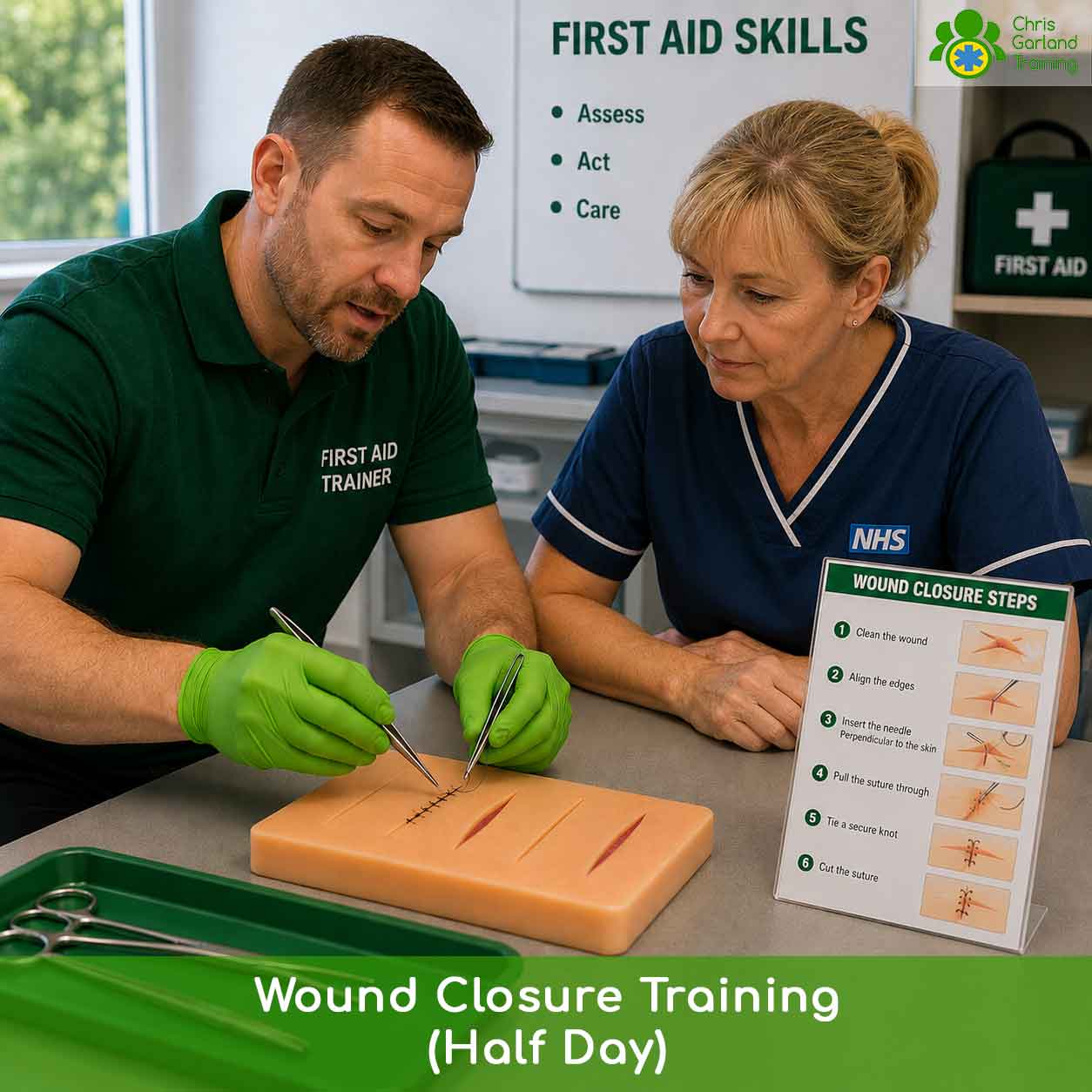
Evaluating minor injuries accurately represents a valuable skill in pre-hospital care settings. Therefore, this half-day wound closure course helps you to manage lacerations effectively. It provides essential theoretical concepts alongside intensive practical tissue application. Consequently, you can treat patients promptly without referring every single minor case onward.
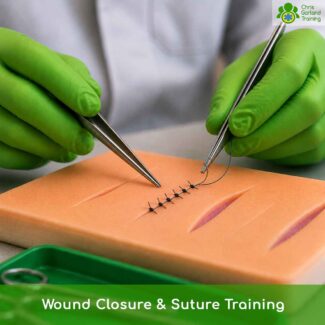
An experienced Accident and Emergency nurse leads every interactive session. Specifically, your training features realistic practice on dedicated suturing pads. Furthermore, we supply organic tissue like pig trotters when available. This configuration ensures your hands-on practice remains authentic.
In addition, every delegate receives a complimentary suturing kit. This free gift includes a training pad and essential tools. Therefore, you can continue refining your physical techniques long after leaving our classroom.
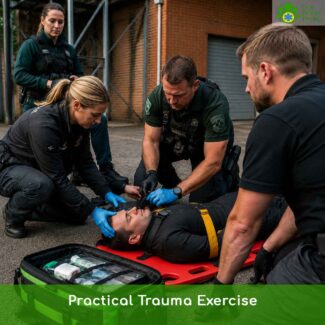
Furthermore, you can pressure test your emergency processing under stress later. For example, book our realistic Practical Trauma Exercise simulator track to check your functional capabilities cleanly.
What You Will Learn
Our expert medical curriculum focuses on three non-suturing closure methods. Specifically, the training modules cover these essential clinical fields:
- Anatomy Rules: Reviewing structural skin anatomy and physiological processes relevant to successful wound healing.
- Clinical Assessment: Identifying trauma indications to select the most appropriate closure mechanism safely.
- Irrigation Techniques: Learning professional cleansing and irrigation workflows to minimise infection risks.
- Local Anaesthesia: Understanding the clinical guidelines governing the safe use of local anaesthetic agents.
- Referral Criteria: Determining precisely when to refer complex trauma onward to specialized hospital departments.
- Closure Strips: Deploying adhesive wound closure strips like Steri-Strips accurately under pressure.
- Surgical Glues: Applying modern topical skin adhesives and liquid surgical glue safely.
- Skin Staples: Operating mechanical surgical staplers correctly to bridge wide wound gaps.
Course Details and Assessment Framework
We deliver this interactive minor trauma curriculum entirely through face-to-face interaction. This ensures high-quality feedback during your practical application blocks.
- Duration: Provides four guided learning contact hours alongside recommended self-study modules.
- Daily Schedule: Public classroom modules run promptly from 9:00am until 1:00pm.
- Testing Rules: Instructors continuously assess your theoretical knowledge and core practical competencies.
- Certification: Delivers a formal certificate of attendance via secure digital PDF.
We issue your certificate in association with Medline Consultancy. Crucially, completing this session does not constitute a formal independent licence to practise. Therefore, employers must establish the correct internal governance frameworks and professional insurance arrangements.
Who Should Attend?
This medical training is widely recognised across NHS trusts and private health sectors. Specifically, it suits registered healthcare professionals holding active GMC, NMC, GPhC, HCPC, or GDC pins. In addition, it supports ambulance technicians, FREC4 responders, RTACC operators, and first responders.
Associate Ambulance Practitioners, Emergency Care Assistants, and Emergency Medical Technicians find this curriculum highly valuable. Furthermore, it fits dental nurses, qualified dentists, veterinarians, and year two medical students. If your specific clinical grade is absent from this list, please contact us before booking.
Are you an advanced medical educator looking to update your teaching credentials? If so, register for our professional Basic Life Support Instructor Refresher course track.
Prerequisites and Safety Cohort Caps
Candidates must be active healthcare professionals or enrolled students to register for this class. In addition, you must be physically capable of performing treatments at table or floor levels. This course operates under strict structural size limits to guarantee excellent technical oversight.
Open public sessions require a minimum of four candidates to run successfully. Meanwhile, health and safety guidelines restrict capacities to a maximum of twelve delegates per instructor. This helps you to receive tailored clinical feedback on your closure techniques.
Venues and Private Training Operations
Our open scheduled tracks run at our modern training centre in Knutsford, Cheshire. Please explore our dedicated Joining Instructions page to check directions before arrival. Alternatively, we provide private group training tracks for corporate medical teams.
We deliver private courses exclusively at our home training centre facility in Knutsford. Please complete our dedicated Corporate & Bespoke Training Quotations Form to request a private booking quote.
Related Training and Compliance Guides
We provide multiple alternative clinical frameworks to support your team medical workflows perfectly.
- Suturing Options: Want to learn structural suturing techniques as well? Book our full-day Wound Closure Course (inc. Suturing) track.
- Instructor Refresher: Re-certify your baseline clinical teaching skillsets by visiting our Basic Life Support Instructor Refresher page.
- Pressure Testing: Practice your trauma prioritisation skills under stress by joining our Practical Trauma Exercise.
- Safety Limits: Learn more about open session activation thresholds by visiting our Number of Participants legal page.