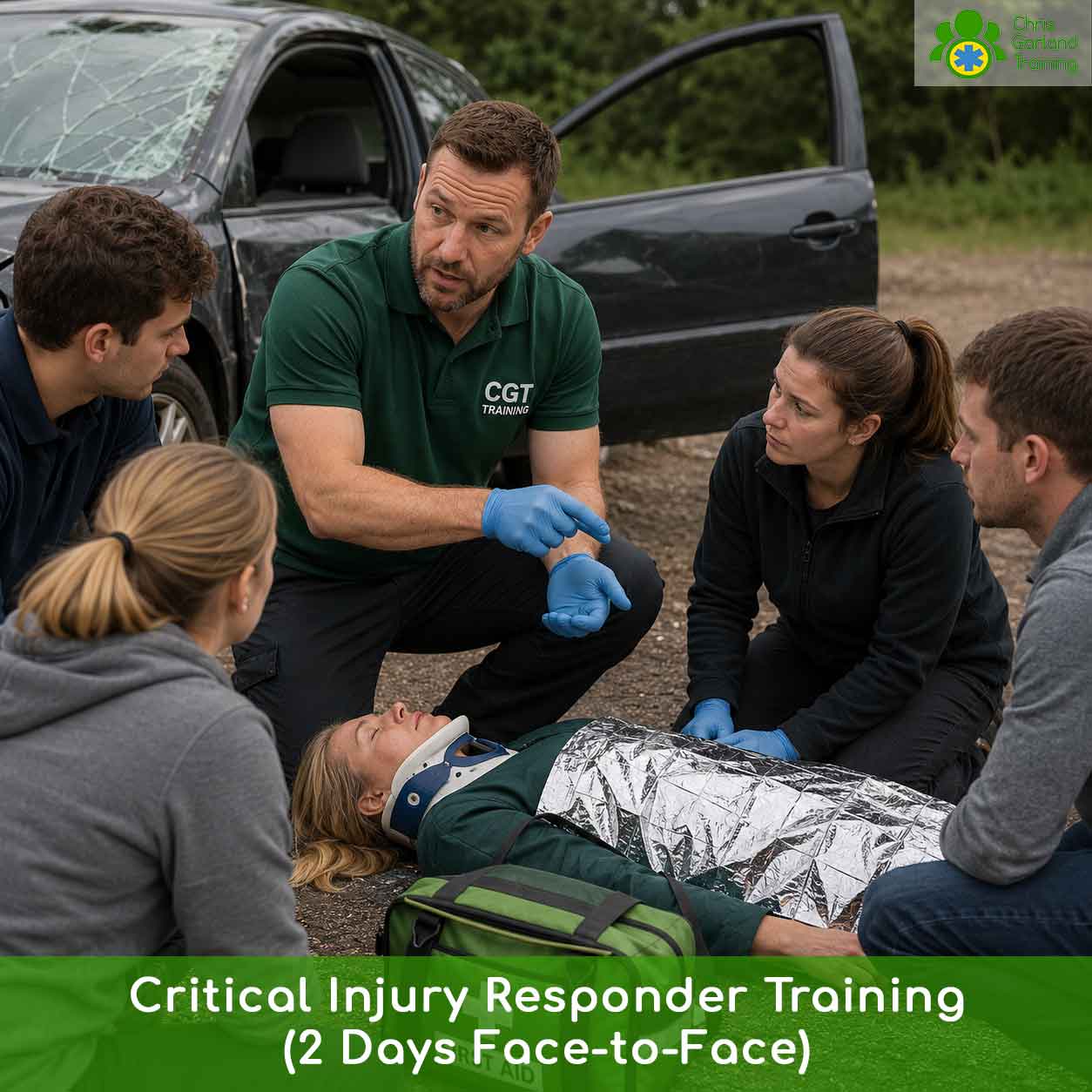
Advanced Pre-Hospital Trauma Training and Venue Compliance
Severe and uncontrolled blood loss remains a primary cause of traumatic death during mass casualty incidents. Knife attacks, acid assaults, and blast injuries require immediate, aggressive intervention. When these incidents occur, the nearest bystander must act quickly to ensure survival. Specifically, your skills help casualties navigate the critical rescue vacuum before emergency services arrive.
“This has been the best first aid medical related course I have ever been on.” – Course Delegate Feedback
Furthermore, choosing the right medical track is essential for high-risk corporate security responders. If you are evaluating different clinical learning pathways, read our expert overview. Review our online guide titled Responder courses – FREC, FPOS or Something else? explicitly because it clarifies advanced options.
Corporate teams looking to meet modern Martyn’s Law recommendations find this intensive syllabus absolutely vital. To ensure your venue aligns perfectly with current UK counter-terrorism preparedness guidance, evaluate your hardware needs too. Consequently, you can review our workplace inventory advice by reading Which First Aid Kit Do I Need? right now.
Managing multiple casualties requires clear clinical understanding, explicitly because physical trauma can trigger sudden cardiac arrest. Interestingly, gender statistical variances exist within standard resuscitation outcomes. To understand these critical healthcare metrics thoroughly, explore our research analysis. Read Women are less likely to survive a cardiac arrest to expand your team knowledge.
What You Will Learn
- The Rescue Vacuum: Mastering the critical immediate period following an incident before emergency services arrive on scene.
- Scene Safety Management: Maintaining strict personal and situational security protocols in unstable or active incident zones.
- Catastrophic Haemorrhage Control: Identifying and aggressively treating complex limb, junctional, and severe torso bleeds effectively.
- Tourniquet Deployment Mastery: Executing correct selection, structural placement, and precise timing documentation for professional devices.
- Wound Packing Science: Deploying advanced haemostatic dressings into deep penetrating wounds to clot blood rapidly.
- Penetrating Weapon Trauma: Assessing and managing critical knife wounds, deep stabbings, and gunshot trauma systematically.
- Chemical & Blast Injuries: Executing immediate decontamination protocols for acid exposure alongside managing primary blast injury patterns.
- Mass Incident Triage: Applying field triage prioritization principles and the ACT protocol under extreme operational pressure.
Course Details
- Format: High-intensity face-to-face classroom learning with extensive practical simulation drills
- Duration: Twelve guided learning hours typically delivered across two consecutive training days
- Accreditation: Aligned with British Standard BS8599-1:2019+A1:2026 trauma frameworks and Martyn’s Law guidance
- Assessment: Continuous practical evaluation by the instructor during scenario drills with no written paper
- Certificate: Official Chris Garland Training digital PDF certificate valid for 3 years
Course Access & Requirements
- Entry Prerequisites: Classroom modules run promptly from 9:00am until 4:00pm each day. Candidates must be over 18 years old to register. In addition, you must hold a valid first aid qualification to attend. Specifically, the absolute minimum entry requirement is a current emergency first aid at work certificate.
- Physical Demands & Caps: Furthermore, candidates must be physically capable of demonstrating trauma procedures directly on the floor. To maintain excellent safety parameters and individual guidance, we strictly cap our attendee numbers. Consequently, we limit classes to ten delegates per instructor. To check general entry thresholds, view our Number of Participants legal page.
- Location & Practical Extensions: Scheduled open courses run regularly at our dedicated facility in Knutsford, Cheshire. Please explore our dedicated Joining Instructions page to check directions before your arrival. Alternatively, candidates can reinforce these functional skills later through our simulated Practical Trauma Exercise module safely.
Useful Links & Resources
- Read our full Classroom Joining Instructions
- Request a group quote via our Corporate & Bespoke Training Quotations Form
- Visit our comprehensive Course FAQ page
Related Courses
- For Shorter Trauma Tracks: If your team requires an accelerated one-day trauma pathway instead, view our Critical Injury Responder Course | 1-Day.
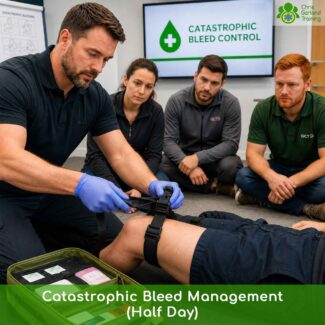
- For Baseline Bleed Control: To train non-security staff in rapid haemorrhage control over a half-day session, choose our Catastrophic Bleed Management Course.
- For Blended Workplace Training: If you manage lower baseline workplace hazards, consider our flexible Emergency First Aid at Work Course | Blended Learning track.