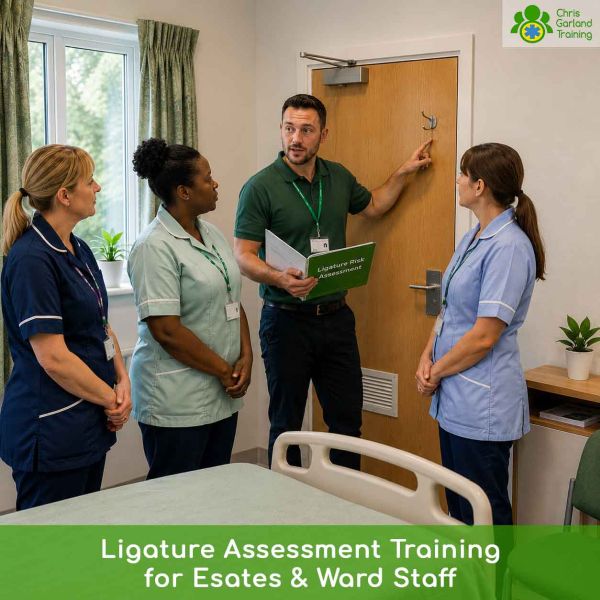
Ligature Assessment Training | Estates and Ward Staff
Our specialised Ligature Assessment Training for Estates and Ward Staff helps registered properties maintain full regulatory compliance. Specifically, the course aligns with the Health and Social Care Act 2008 (Regulated Activities) Regulations 2014. Therefore, providers can ensure their premises remain safe and securely maintained. This targeted session helps your team to satisfy CQC requirements completely.
Furthermore, structural safety overlaps heavily with organisational emergency logistics. For example, read our Care Home Case Study: Navigating Evacuation Compliance, High Staff Turnover online. Consequently, thorough structural mapping supports your legal evacuation frameworks smoothly.
Regulation 12 mandates the delivery of safe care and treatment through secure physical equipment. Meanwhile, Regulation 15 dictates that clinical premises must be suitable for their intended purpose. The Care Quality Commission routinely takes enforcement action against unidentified environmental hazards. Consequently, proper workforce training protects your organisation from severe assessment failures.
Furthermore, the official CQC Brief Guide BG015 outlines clear expectations for registered healthcare providers. Specifically, inspection teams evaluate the support given to estates and ward personnel. The commission directly tracks staff competencies in executing detailed environmental reviews. Therefore, establishing structured inspection protocols remains a vital operational duty.
In addition, estates teams must collaborate closely with clinical ward staff to identify behavioural triggers. Specifically, review our cornerstone article Ligature Response: How to Identify and Respond to Warning Signs. Consequently, this collective awareness builds a comprehensive safeguarding network.
Course Objectives and Targeted Audience Profiles
The primary aim of this course is to equip estate maintenance crews with vital practical skills. Specifically, participants learn to identify, mitigate, and respond to ligature anchor risks effectively. The ultimate objective remains to foster a safer physical environment for all property occupants. Consequently, awareness increases significantly during daily workplace maintenance routines.
This technical curriculum supports diverse operational staff across multiple commercial and public sectors. For example, it targets maintenance staff, estates teams, ward personnel, and centre managers working in:
- Public Buildings: Managing council offices, local libraries, and civic hubs safely.
- Educational Settings: Safeguarding schools where young people require dedicated structural consideration.
- Community Hubs: Maintaining community centres and local public meeting facilities cleanly.
- Supported Housing: Auditing semi-independent living spaces and children’s residential homes.
- High-Risk Units: Protecting mental health facilities, acute inpatient wards, and crisis centres.
- Secure Settings: Managing systemic environmental safety frameworks within active prisons.
- General Hospitals: Reviewing acute emergency departments and standard medical wards.
Comprehensive Course Syllabus
Our practitioner-led modules address structural estate hazards systematically. Specifically, the training blocks cover these vital operational fields:
- Introduction and national regulatory course context.
- Environmental context tracking high and medium-risk spaces.
- Vulnerable populations alongside hidden patient risk factors.
- Identifying active ligature points inside commercial properties.
- Uncovering hidden and routinely overlooked structural risks.
- Risk assessment methodologies and physical mitigation workflows.
- Implementing robust structural mitigation strategies cleanly.
- Practical solutions workshop utilising real property fixtures.
- Statutory maintenance plans and scheduled inspection protocols.
- Safe procurement frameworks and hardware installation rules.
- Retrofit considerations for established historical care facilities.
- Legal frameworks alongside national regulatory inspection guidelines.
- Implementation workflows and immediate institutional action planning.
Course Details and Technical Assessment
We deliver this high-intensity training entirely through interactive face-to-face instruction. Specifically, physical risk mapping requires direct tutor feedback.
- Duration: Provides eight guided hours, typically running from 9:00am until 5:00pm.
- Break Parameters: Includes approximately one hour of rest breaks distributed spread through the day.
- Testing Rules: Instructors verify competence through practical assessments and continual knowledge tracking throughout.
- Certification: Successful participants receive a formal qualification certified by Chris Garland Training.
Prerequisites and Safety Enrolment Limits
Candidates must be aged 18 or over to participate in this track. Specifically, the syllabus handles highly sensitive topics regarding self-harm risks. We recommend a baseline guideline background of GCSE Grade D-G literacy. However, these academic benchmarks remain entirely non-mandatory for active site workers.
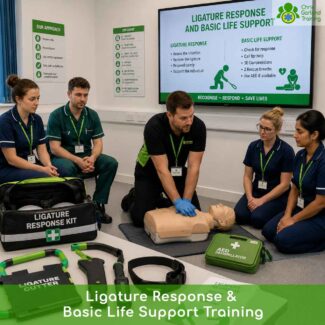
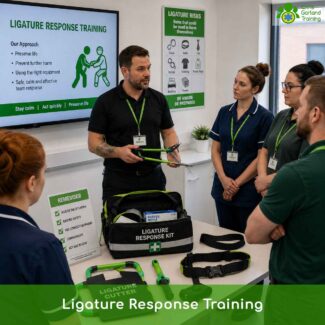
While estates crews focus on environmental audits, clinical staff require active crisis handling skills. For instance, you can explore our core Ligature Response Training track. Alternatively, choose our Ligature Response and Basic Life Support program for combined certification.
Please contact our team before booking to coordinate any reasonable adjustments. Open scheduled courses require a minimum of four candidates to run. Meanwhile, we limit maximum capacities strictly to fourteen delegates per qualified instructor. This framework ensures high-quality individual coaching during our practical mapping workshops.
Furthermore, trained personnel must maintain their physical rescue competencies systematically between formal inspection updates. Therefore, view our practical Ligature Response Training – Annual Refresher module. Consequently, this continuous development ensures complete workplace protection throughout the year.
Venues and Private Corporate Bookings
Our open scheduled public courses run at our modern training facility in Knutsford, Cheshire. Please explore our dedicated Joining Instructions page to check preparation rules before arrival.
Alternatively, we travel nationwide to deliver private corporate training tracks at your premises. Private session group sizes can range flexibly from one to fourteen candidates. Consequently, this configuration allows custom adjustments to match your specific building layout. Please complete our Corporate & Bespoke Training Quotations Form to request a quotation.
Related Training and Compliance Guides
We provide comprehensive safety frameworks and official inspection briefs to support your property management teams.
- Inspection Guidance: Review standard commission parameters by reading the official CQC Ligature Anchor Points Brief Guide.
- Substance Misuse: Access specific clinical risk profiles by exploring the CQC Substance Misuse Services Brief Guide.
- Crisis Indicators: Learn to identify behavioural distress marks by visiting Ligature Response: How to Identify and Respond to Warning Signs.
- Evacuation Compliance: Study care home environmental workflows by reviewing the Care Home Case Study: Navigating Evacuation Compliance, High Staff Turnover.
- Clinical Intervention: Explore active physical containment practices via the Ligature Response Training page.
- Life Support: Access combined medical first aid protocols on our Ligature Response and Basic Life Support page.
- Annual Refreshers: Maintain hands-on tool competencies over time by booking the Ligature Response Training – Annual Refresher.
- Private Enquiries: Book a custom environmental simulation by visiting our Corporate & Bespoke Training Quotations Form.
- Hardware Instructions: Verify your arrival parameters by checking our dedicated Joining Instructions page.