Safeguarding Adults | E-Learning Course
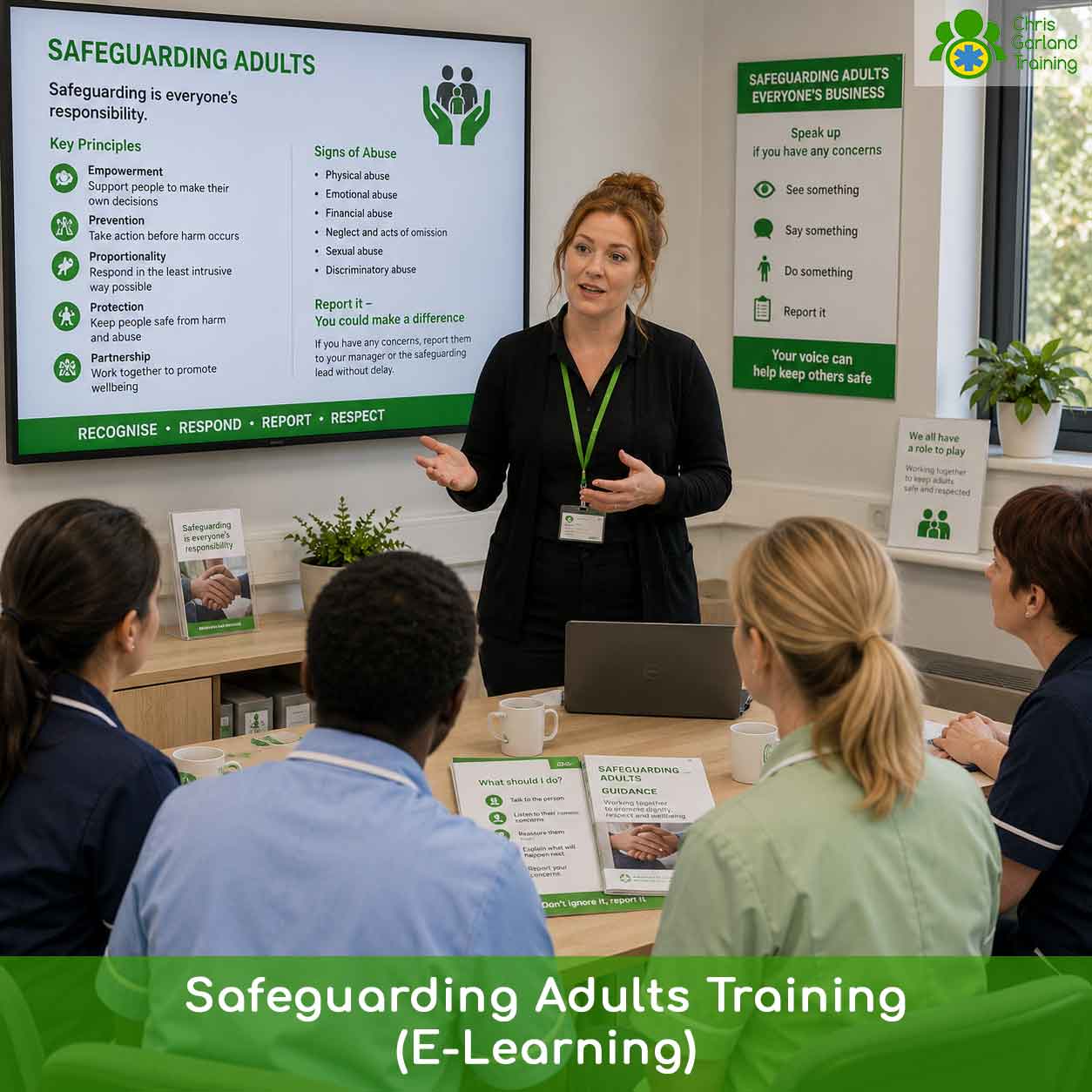
Every adult has the right to live free from harm. Safeguarding adults means protecting vulnerable people from abuse, neglect, or exploitation. This duty does not belong only to designated managers. Everyone working with adults at risk plays a critical part in their safety.
The Care Act 2014 sets clear statutory legal duties for care providers. Health, housing, and voluntary sectors must cooperate to protect individuals. The first step is helping your staff understand the adult protection system. This online course builds that vital baseline of knowledge quickly.
What You Will Learn
Our interactive curriculum covers the modern legal policies and practical response steps. The scannable modules cover these important areas:
The Legal and Policy Framework
- The Care Act 2014: Master the six core principles of empowerment, prevention, proportionality, protection, partnership, and accountability.
- Multi-Agency Working: Review the distinct roles of local authorities, the NHS, the police, and Safeguarding Adults Boards.
- Mental Capacity Act 2005: Explore the relationships between capacity tracking, best interests decisions, and patient advocacy.
Types of Abuse and Neglect
- Ten Crucial Categories: Study physical, psychological, financial, sexual, discriminatory, and organisational abuse formats.
- Hidden Harm Formats: Understand modern slavery, domestic abuse, active neglect, and personal self-neglect risks.
- Vulnerability Metrics: Identify who faces the highest risks of exploitation within care settings and why.
Recognition and Response
- Symptom Spotting: Learn to identify physical signs, behavioural changes, and environmental indicators of active harm.
- Disclosure Handling: Learn how to respond safely if a vulnerable adult tells you about abuse.
- Recording and Reporting: Document your concerns accurately and learn exactly who to report to.
- The Referral Process: Navigate what happens after you raise an official care concern.
- Whistleblowing Rights: Understand your legal protections when raising concerns about a colleague or organisation.
Testing and Assessment Standards
We verify your understanding through straightforward digital checks. Short tests feature throughout the modules to lock in learning. The course ends with a final multiple-choice exam paper. You must score at least 70% to pass successfully.
Prerequisites and Technical Details
This course suits care assistants, healthcare professionals, and housing officers. Anyone in a public-facing role will find it highly valuable. We recommend a basic understanding of English and maths before starting. A GCSE grade C or Level 2 equivalent baseline is ideal.
You can run the digital platform on any modern electronic device. We recommend using a laptop or desktop computer. A clear screen helps you view the video elements perfectly. Your secure login details arrive via email shortly after purchase. Please read our Course Joining Instructions to prepare.
Adult Protection Resources
Group Training & Corporate Enquiries
Do you need to train your team or purchase bulk licences? We provide flexible corporate options across our entire course catalogue to suit your organisation's schedule and budget.
- Classroom & Blended Courses: Our expert instructors can travel directly to your venue to deliver private group training. Alternatively, we can host your team at our dedicated training centre in Knutsford. This is the most cost-effective route for group compliance.
- Online E-Learning Courses: We offer volume tier discounts for corporate clients purchasing multiple training seats. Our team handles the enrolment setup on our end to get your candidates registered quickly and seamlessly.
To arrange a private group session, discuss international travel logistics, or request a custom price breakdown for bulk e-learning licences, please visit our dedicated Corporate & Bespoke Training Quotations page.
What Happens After You Book?
We make the onboarding process completely frictionless. This allows you or your team to focus entirely on your training:
- Instant Email Confirmation: The moment you complete your booking, our system automatically delivers your order confirmation and receipt straight to your inbox.
- For Online & Blended Learning Elements: Following your order confirmation, our team will validate your booking and issue your unique access keys. We release these digital platform login details as quickly as possible during normal working hours. Once received, you can log in on any device and study entirely at your own pace.
- For Classroom & Practical Sessions: Most face-to-face courses begin promptly at 09:00am. We recommend arriving 15 minutes early to settle in. Please check your specific course description page for exact daytime run timings.
- All-Inclusive Transparent Pricing: The price you see covers your registration fees, official course textbooks (where applicable), examination materials, and final certificate processing. We never charge hidden additions.
Please visit our comprehensive Joining Instructions page to review specific venue directions, local parking options, and clothing recommendations for practical modules.
Get Notified of Upcoming Course Schedules
Course availability depends entirely on your chosen delivery method:
- Online E-Learning Courses: You do not need to choose a date. Following checkout, our team will validate your booking and issue your access keys as quickly as possible during working hours. You can then begin learning immediately.
- Classroom & Blended Courses: We regularly release new open-course dates throughout the month across our training centres. To view currently active schedules, simply scroll back to the top of this page and click the green "Choose an option" dropdown menu.
If our published diary dates do not match your setting's availability, don't worry. Drop your details into the contact form below. Our team will automatically notify you the moment our next block of course schedules goes live.
Why Choose Chris Garland Training?
Chris Garland Training is a multi-award-winning, ethical training provider. We operate on the principle of Honest Stewardship. We do not treat safety compliance as a corporate checkbox exercise. Instead, we view it as a vital investment in protecting human lives.
Accreditation & Authority
- Established Quality: We deliver expert safety training with a consistent 5-star rating from thousands of corporate and private clients.
- Certified Excellence: Our courses carry full backing and certification from Chris Garland Training alongside Ofqual Regulated Awarding Organisations. They meet all Health & Safety Executive (HSE) and Ofsted standards.
- Expert Instructors: Professionally qualified instructors deliver every session. They hold enhanced DBS certificates and undergo rigorous quality assurance monitoring.
Environmentally & Socially Responsible
Your booking actively advances global sustainability and supports critical humanitarian networks through our certified eco-partnerships:
- Global Reforestation: Every course place you book funds native tree planting across heavily deforested areas with JUST ONE Tree.
- Charity Support: We proudly co-fund the life-saving aviation networks of the North West Air Ambulance Charity.
- Ocean Cleanup: Your training helps purchase beach clean kits through our active association with Surfers Against Sewage.