Our Impact
Radical Transparency: Contribution, Not Compensation
At Chris Garland Training, we take our environmental and social impact seriously. However, we believe there is a vital distinction between offsetting and contribution. Many businesses use environmental initiatives as a “get out of jail free” card, “passing the buck” by paying for carbon credits to cancel out their footprint rather than changing how they operate.
We choose a different path: Radical Transparency. This means we do not just tell you we are an ethical partner: we show you exactly how we operate. We refuse to treat the planet as a line item on a balance sheet. We do not support our partners to “buy” a clean conscience: we do it because active restoration is part of being a responsible business.
Our mission statement is simple:
Knowledge, Empowerment, Sustainability: Providing knowledge for personal growth and business success, while promoting sustainable practices that benefit people and the planet.
We believe that every business has a Duty of Care: not just to its customers, but to the planet and the communities we serve. This page is an open audit of our operations and our ethics. From the 10-year-old monitors in our office to the tonnes of plastic we have helped remove from our waterways, we choose Honest Stewardship.
Whether we are supporting reforestation, removing plastic, or aiding life-saving local charities, it is what we do: not because we have to, but because we should.
Our Beliefs
Knowledge as a Catalyst: We believe that knowledge is only useful if it’s shared. When shared, it has the power to magnify impact and drive positive change.
Inclusive Empowerment: We believe that information should be accessible to everyone, ensuring that sight loss, hearing impairment, or neurodiversity are never barriers to growth.
Collective Action: We believe that while individuals make a difference, working in partnership allows us to magnify our impact on the world.
Honest Stewardship: We believe that global challenges like plastic pollution and deforestation cannot be solved by passing the buck. We believe in taking direct, transparent action.
Contribution over Compensation: We believe our environmental and social efforts should be a proactive gift to the future, not a reactive purchase to balance our past.
Our Values
Excellence in Training: Provide the highest standard of training possible, ensuring every learner leaves with the confidence to act.
Continuous Growth: Embrace the mindset of “Learn more today, to be better tomorrow.”
Wellbeing First: Actively live the Charter for Employers Positive about Mental Health, supporting our team and our students.
Championing Inclusion: Proactively promote equality, diversity, and inclusion in every classroom and every conversation.
Ethical Courage: Do what is right, even when it is not the easiest or most profitable path for us.
Uncompromising Integrity: We refuse to pass the buck. We maintain transparency in our operations and our impact, avoiding shortcuts and greenwashing.
Meaningful Contribution: Continually advance our commitment to Social Value and Environmental Responsibility through direct action, not just paper credits.
Carbon Footprint
Carbon Footprint: Reduction First, Restoration Always
We recognise that the greenest carbon is the carbon that is never emitted. Before we look at restoration, we focus on reduction. We do not view our environmental work as a way to “balance the books” of our emissions: we view it as a necessary investment in the planet’s future.

Digital Integrity: Ethical Hosting & Live Monitoring
Our digital footprint is powered by Krystal.io, the first B Corp certified web host in the UK. Our website runs on 100% renewable energy sourced directly from the sun, wind, and sea via Ecotricity. To ensure we stay accountable, our website is continually assessed by an independent third party for its carbon footprint. You can see the live results of this assessment at the bottom of each page.

Every Search Plants a Tree: Ecosia
In addition to our work with JUST ONE Tree, we plant trees simply by using Ecosia as our preferred search engine. Every search made via Ecosia removes approximately 1kg of CO2 from the atmosphere. It is a brilliant way for any business to become greener at no extra cost, as the planting is funded by the companies who pay to advertise on the platform. Ecosia does not store your personal information and its servers are powered by 200% renewable energy.
Restoring Ecosystems: Our Partnership with JUST ONE Tree
We are immensely proud to partner with JUST ONE Tree, a non-profit initiative that works to reverse biodiversity loss through global reforestation. They restore land and kelp forests in the oceans, focusing on areas severely affected by deforestation to maximize climate impact. In the process, they provide agricultural education and sustainable incomes to local communities, enabling families to fund higher education and bring knowledge back to their regions.
When you book a course with us, a portion of your fee is donated directly to this work. This is not an “offset” for your travel: it is a direct contribution to global recovery. In 2023, JUST ONE Tree became an Actor in the UN Decade on Ecosystem Restoration.
To date, your bookings have helped us fund:
3,700 Trees planted across the globe.
45.6 Tonnes of CO2 sequestered from the atmosphere each year (approx.).
1140 Tonnes of CO2 projected over the next 25 years (approx.).
Accountability: Carbon Literacy & Certification
Integrity requires transparency. We are currently on the journey to becoming a Certified Carbon Literate Organisation. We are training our team to understand and reduce our impact, with an immediate target of Bronze accreditation and a roadmap toward Silver within the next two years.
Plastic Waste
Plastic Waste: Restoring Our Waterways
Our commitment to the planet does not end at the treeline. We believe that a truly responsible business must address the crisis in our oceans and waterways with the same level of integrity as we do on land. This is another area where we refuse to “pass the buck.” We believe in making a tangible contribution to a cleaner world by tackling pollution at the source and cleaning up what is already there.
Partnership: Surfers Against Sewage
We are proud members of the Surfers Against Sewage: Ocean Network. This organisation is at the forefront of the fight against plastic and human waste pollution in UK waters. By supporting their mission, we help fund the tools and safety equipment needed to reclaim our beaches, streams, and mountains from plastic waste.
To date, your support has helped us fund:
- 72 reusable beach clean kits: These heavy-duty kits provide collection and safety equipment for amazing volunteers across the country. Because they are reusable, their impact continues long after the first clean.
- 5,450kg of plastic removed: This represents waste pulled directly from UK beaches, streams, and streets.
- Personal Action: We even take this commitment on the road with us. Our own beach clean sacks have already collected nearly 18kg of waste during local walks with our dog.
Innovation in the Classroom Training to save lives often requires single-use medical products. However, we are constantly investigating ways to minimise this impact without compromising hygiene or safety:
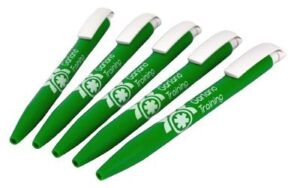
Bio-Compostable Pens: The pens used by our candidates are 80% bio-compostable and fully refillable. This keeps them out of landfills and extends their lifespan significantly.
Hygiene & Chemicals: We have moved away from single-use plastic “wet wipes.” Instead, we use an isopropyl alcohol solution applied with cloths made from 90% bamboo: one of the world’s most sustainable fibres. For manikin head sterilisation, we use food-safe chemicals like Milton, created in small batches to minimise waste.
- The Search for Alternatives: We use recyclable plastic lungs for our manikins and are actively searching for sustainable, medical-grade alternatives for both lungs and gloves that meet safety type-approvals.
Resource Circulation: We reuse bandages multiple times before they are replaced, and candidates are encouraged to take them home to practice. We also welcome donations of out-of-date workplace resources to extend their functional life through training.
Charity Donations And Discounts
Charity and Community Contribution
Social value is just as important to us as environmental impact. We believe in supporting the vital services that keep our communities safe: ensuring that when an emergency happens, the right help is available. This is not about corporate social responsibility as a checkbox. It is about a genuine, ongoing commitment to the people we serve.
North West Air Ambulance Charity (NWAA)
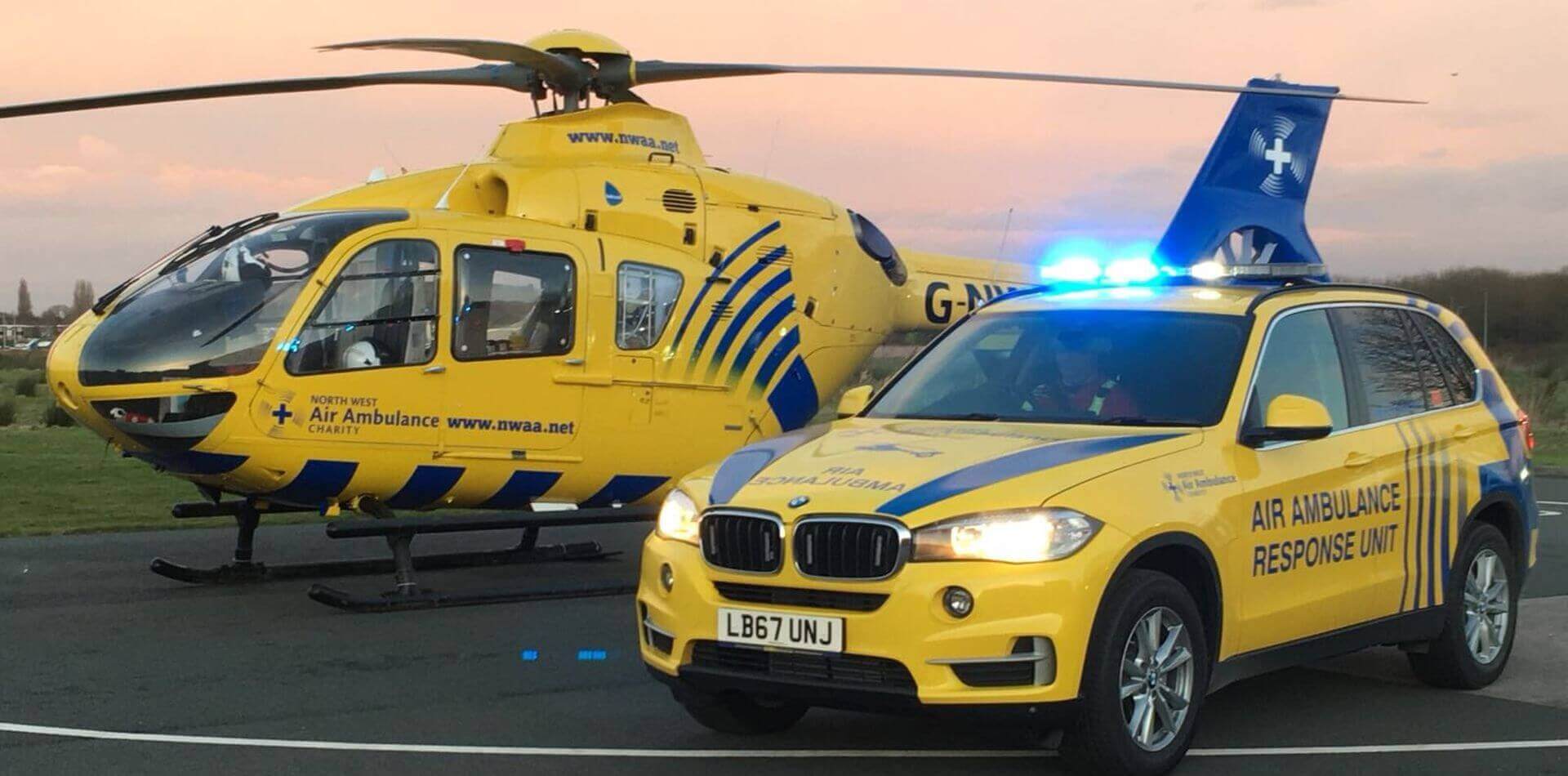
The NWAA performs life-saving work every single day, often in the most challenging conditions. Operating three EC135 aircraft and a fleet of HEMS response vehicles, they ensure that advanced clinical care can reach patients quickly. This is especially vital in city centres or during bad weather when helicopters may be grounded.
We are proud to support this vital service directly. For every course booking made with Chris Garland Training, we gift a portion of the fee to the NWAA. When you choose to train with us, you are already making a tangible contribution to this life-saving work.
To date, your bookings have funded:
1,074 miles of life-saving flight: Every mile represents a critical connection between a patient and the emergency care they need.
Supporting the Third Sector: Discounts for Charities
Charities do incredible work with limited resources. We believe that money donated to a charity should go as far as possible, especially when it comes to essential safety training.
To support this, we offer a 10% discount to all registered charities. This ensures that their funds can stay focused on their core mission while their teams remain fully trained and compliant with the highest safety standards.
Travel and Accommodation
Travel and Accommodation: Minimising the Footprint
As a national training provider, travel is a necessary part of our operations. However, we do not use this as an excuse to simply buy carbon credits. Instead, we audit our logistics to ensure that every mile driven is essential and as efficient as possible.
Vehicle Efficiency and Strategic Logistics
As a national provider, we travel throughout the UK to deliver private courses at client venues. We believe that sending one trainer to a group of twelve students is far more efficient than asking those twelve students to travel to a central hub. To ensure this travel is as sustainable as possible, we operate a strategic vehicle policy:
Local & Regional Training Delivery: For all courses held within 75 miles of our Knutsford training centre, we aim to use our Electric Vehicle (EV) wherever possible. This allows us to significantly reduce emissions for the majority of our regional work.
National Training Delivery: For courses located more than 75 miles away, we utilise our high-efficiency Internal Combustion Engine (ICE) vehicles. We have found this to be the most time and cost-efficient method for our trainers to reach clients across the UK, ensuring we remain responsive and reliable on a national scale.
By maintaining our fleet to the highest standards and matching the vehicle to the journey, we minimise our environmental footprint while maintaining the operational excellence our clients expect.
Scheduled Courses and Public Transport
For our scheduled courses in Knutsford, we recognise that candidates often travel from different businesses, which can lead to individual car journeys. To help reduce the local environmental impact, we are proud to be located in a highly accessible area:
Bus Travel: Knutsford Bus Station is just a 3 minute walk from our training centre.
Rail Travel: Knutsford Railway Station is just a 6 minute walk away.
Car Sharing: If multiple members of your team are attending the same scheduled course, we ask that you consider travelling together to reduce total road miles and local parking pressure.
Ethical Accommodation
When our trainers require overnight stays for distant courses, our choices are guided by our values. We prioritise accommodation based on three criteria:
Proximity: Staying as close as possible to the client venue to minimise local travel.
Environmental Credentials: Choosing venues with active sustainability policies.
Local Impact: We give precedence to small, local businesses and B&Bs over national hotel chains. Supporting a local business owner has a much more positive social and economic impact on the community we are visiting.
Paper and Packaging
Paper and Packaging: Digital First, Responsible Always
The training industry has traditionally been reliant on vast amounts of paper for manuals, exams, and registration forms. We are actively dismantling that model. Our goal is to reduce our A4 paper consumption to an absolute minimum, ensuring that when we do use paper, it is sourced and handled with the highest environmental standards.
Sustainable Sourcing
Every sheet of paper used in our office meets strict ethical criteria. We only use paper that is:
FSC Accredited: Sourced from responsibly managed forests.
Totally Chlorine Free (TCF): Reducing the chemical impact of production.
Low Weight: Minimising the raw material required without sacrificing quality.
- Recycled or Responsible: Prioritising recycled content wherever possible.
Circular Habits in the Office and Classroom
We treat paper as a valuable resource rather than a disposable one. In our office, we reuse single-sided printed paper for notes. In the classroom, we continue to find ways to extend the lifecycle of every printed resource.
A Digital Reality: Online Forms and Certificates
We have already successfully transitioned our candidate registration and feedback processes to a fully online system. This change has eliminated a significant volume of paper waste and streamlined the experience for our students. Additionally, all our course certificates are issued in PDF format by default. This digital-default approach significantly reduces the resources used and the waste products created during the printing and postage process.
The Future: Online Exams
We are currently investigating the rollout of online exams that can be undertaken directly in the classroom. By moving away from traditional paper-based exams, we aim to further reduce our physical footprint while maintaining the rigorous assessment standards our clients expect.
High-Security, Low-Energy Recycling
We take data protection as seriously as environmental protection. Before recycling, any paper containing identifiable information is cross-cut shredded to meet BS EN 15713:2009 standards. Our shredding process is highly efficient: we only shred what is legally necessary to protect data. Paper that does not contain confidential information is recycled directly without shredding to minimise electricity consumption.
Electricity & Electrical Items
Electricity and Electrical Items: Efficiency and Longevity
Our approach to technology is guided by the principle of longevity. We believe that the most sustainable piece of equipment is the one that already exists. Rather than chasing the latest trends, we focus on maintaining a high-performance, low-energy infrastructure that serves our mission without unnecessary waste.
Renewable Energy and LED Lighting
Our office is powered by a 100% renewable electricity supply sourced from wind, solar, and hydro power. We utilise high-efficiency LED light bulbs in both our office and our training rooms, which significantly reduce our electricity consumption and lower the carbon emissions associated with lighting our workspaces.
Hardware Longevity and High-Efficiency Computing
We audit our hardware based on energy efficiency and its total lifecycle impact:
High-Efficiency Workstations: We utilise ultra-small form factor PCs in our office. These units provide the performance required for a modern training business while maintaining a significantly lower energy draw than traditional desktop towers.
Secondary Life for Displays: All our computer monitors are over 10 years old. They are second-hand, Energy Star rated units that we have saved from the waste stream. By extending their life, we prevent the carbon-intensive manufacturing process required for new screens.
- Pre-owned Training Laptops: We apply this same philosophy to our training delivery. Our trainers utilise a fleet of older and second-hand laptops to run classroom presentations. By opting for reliable, pre-owned hardware instead of purchasing new models, we significantly reduce the demand for new electronics and the associated manufacturing emissions.
Refurbished Infrastructure: Our power protection systems (UPS) are refurbished units. This ensures that our essential equipment is protected while embodying our commitment to reuse over replacement.
The LED Projector: A Multi-Purpose Efficiency Tool
We use LED projectors for our training courses. These units are much lighter than previous models and features a high-quality built-in speaker. This dual-purpose design means we no longer need to transport a separate speaker system, reducing the weight of our equipment and the fuel used to transport it. Furthermore, the LED technology uses significantly less electricity than traditional bulb-based projectors.
Intelligent Power: Reclaiming the Battery Cycle
First aid training requires a high volume of AA and AAA batteries to power training defibrillators and remote controls. In 2020, we moved away from single-use batteries entirely.
Rechargeable Power: All our training equipment is now powered by rechargeable batteries, preventing thousands of single-use cells from entering the waste stream.
Intelligent Charging: We utilise intelligent battery chargers that only charge cells as they need it. These units feature trickle-charging technology to maintain battery health without overdrawing electricity. This ensures our batteries last longer and our energy use remains as lean as possible.
Secure and Efficient Data Management
For security and efficiency, we utilise office-based Synology Network Attached Storage (NAS) drives. This allows us to manage our data locally and securely while reducing the number of high-powered machines running constantly.
Power Scheduling: To minimise unnecessary energy consumption, both our primary and backup NAS drives operate on a strict power schedule. They are only powered on during office hours, ensuring they do not draw electricity when the office is closed.
Redundancy and Resilience: For absolute resilience, we maintain an off-site backup from our primary NAS to a duplicate Synology unit, which follows the same disciplined power management profile.
End of Life and the Future
When our equipment finally reaches the end of its functional life, it is handled by Green IT Disposal. This ensures that our old equipment is recycled, reused, or disposed of in a way that minimises environmental harm. Looking ahead, we are investigating the feasibility of a solar power system for our office. This project may include the use of Sigenergy Sigen battery systems, allowing us to store our own clean energy and move toward true energy independence.
Accessibility and Inclusion
Accessibility and Inclusion: Knowledge for Everyone
We believe that knowledge is a catalyst for change, but it can only fulfil its potential if it is accessible to all. Our commitment to inclusion is rooted in the belief that barriers to learning: whether digital, physical, or social: must be actively identified and dismantled.
Digital Accessibility and Integrity
Our website is designed to be usable by everyone, regardless of their ability or the technology they use. To ensure a high standard of digital inclusion, we utilise two specific tools:
OneTap Pro Accessibility: This plugin allows users to customise their browsing experience, providing immediate adjustments for contrast, font size, and readability.
WP Accessibility: This tool works in the background to identify and fix common accessibility issues in the website code, ensuring better compatibility with screen readers and keyboard navigation.
We strive to meet and exceed WCAG 2.2 AA standards, ensuring our online presence is perceivable, operable, understandable, and robust. You can read our full commitment on our Accessibility page.
Reasonable Adjustments and Special Considerations
In accordance with the Equality Act 2010, we have a clear duty to make reasonable adjustments for our learners. We believe that an assessment of skills should be a fair measure of competence, not a test of a person’s disability. Our Reasonable Adjustments and Special Considerations Policy ensures that access to training remains fair and open without compromising the integrity of the qualification.
If you or your team require any adjustments to support your learning or assessment, please contact us before your course so that we can ensure everything is in place for you.
Enhancing the Classroom Experience
We go beyond the minimum requirements to ensure every learner feels supported in our training rooms. To achieve this, we utilise:
Inclusive Language and Translation: We use Microsoft’s live translation tools and provide subtitles for our video content to support learners for whom English is not a first language.
Hearing Support: We have invested in a portable hearing loop system for those with hearing impairments, as well as Bluetooth microphones for compatible hearing aids.
Welfare and Wellbeing: Our training centre features full wheelchair access, including ramps and a lift to the upper floor. We also provide welfare essentials, such as our menopause support bags, to ensure that personal health needs are never a barrier to a comfortable learning experience.
Hidden Disabilities and Community Support
We are proud supporters of the Hidden Disabilities Sunflower scheme. Our team is trained to recognise the sunflower symbol and provide the additional time, understanding, or assistance that individuals with non-visible disabilities may require.
Ethical Stewardship: Modern Slavery
Our “Contribution, not Compensation” philosophy is most visible in our stance on Modern Slavery. Although our turnover falls well below the legal threshold of £36 million, we choose to publish an annual Modern Slavery Statement as a matter of principle.
We believe that ignoring potential exploitation simply because you are not “legally required” to report it is another form of passing the buck. Instead, we take responsibility for our supply chain by actively auditing our partners: from venue providers to equipment suppliers: to ensure they share our values of human rights and fair treatment. We believe that any client committed to the Modern Slavery Act 2015 should be able to rely on the absolute integrity of their training partner.
A Safe and Affirmative Space
As a Disability Confident Committed employer and a signatory of the Charter for Employers Positive about Mental Health, we foster a workplace and learning environment free from harassment. We maintain a zero-tolerance approach to discrimination and are dedicated to providing a safe, affirmative space for all individuals, including the LGBTQI+ community.
Chemicals
Hygiene and Chemical Integrity
First aid and safety training requires rigorous hygiene standards to ensure the safety of every candidate. Traditionally, the industry has relied on harsh chemicals and mountains of disposable plastic wipes. We have audited our cleaning protocols to ensure our hygiene practices are as environmentally responsible as they are clinically effective.
Moving Away from Disposable Wipes
Maintaining high clinical standards of hygiene does not have to mean relying on disposable plastic wipes. We have moved away from single-use “wet wipes” in favour of a more sustainable, dual-stream approach:
70% Isopropyl Alcohol: We utilise a high-grade alcohol solution for the rapid disinfection of training equipment. To avoid the plastic-based textiles found in standard wipes, this is applied using cloths made from 90% bamboo. Bamboo is a significantly more sustainable and biodegradable fibre, ensuring that our cleaning process does not contribute to microplastic pollution.
Food-Safe Sterilisation: For manikin head sterilisation, we use Milton: a food-safe chemical that is highly effective against bacteria and viruses. We prepare this in small batches for each course, preventing active ingredients from degrading, which ensures 100% kill rates for pathogens. This ensures the solution is always at peak effectiveness while minimising the volume of chemical waste produced.
Batch Management: By monitoring our chemical usage and preparing solutions on an as-needed basis, we ensure that we maintain a sterile training environment without the unnecessary over-ordering or disposal of surplus cleaning agents.
Single Use Training Products
Single-Use Training Products: A Circular Strategy
First aid and safety training involves the use of many physical items that, in a traditional setting, have a very short lifespan. We refuse to accept the “use once and throw away” culture. Instead, we audit our consumables to find items that can be refilled, recycled, or repurposed to ensure they serve a purpose for as long as possible.
Refillable and Bio-Compostable Tools
The pens we provide to our candidates are a prime example of our reduction strategy. They are 80% bio-compostable and, crucially, they are fully refillable. By choosing high-quality, refillable tools, we ensure that these items remain in use rather than contributing to the global plastic crisis at the end of a single course.
The Search for Sustainable Medical Grade Alternatives
Hygiene and safety are our primary concerns, which often means using medical-grade products that are difficult to replace with eco-friendly versions. However, we are actively pushing for better industry standards:
Manikin Lungs: While hygiene requires that manikin lungs are replaced regularly, we currently utilise recyclable plastic versions. We are also searching for and testing medical-grade, sustainable alternatives that meet the necessary safety type-approvals.
Biodegradable Gloves: We are investigating the transition to biodegradable, medical-grade gloves. These provide the same high level of protection as traditional nitrile but with a significantly reduced long-term environmental footprint.
Resource Circulation and Reuse
We believe that a product’s life should not end just because the training day has finished. We promote a circular economy through two key initiatives:
Bandage Reuse and Practice: We utilise high-quality bandages that can be used multiple times throughout a course. At the end of the day, we encourage candidates to take their bandages home so they can continue to practise their skills, ensuring the material remains a useful learning tool for as long as possible.
Donated Resources: We welcome donations of out-of-date or “short-dated” medical resources from our clients. While these items can no longer be used in a clinical setting, they are perfect for training environments. By circulating these resources into our classrooms, we prevent them from being sent to landfill prematurely.
Waste Management
Waste Management and the Duty of Care
We believe that being an ethical business means taking full responsibility for every item that enters and leaves our premises. In England, the management of business waste is governed by strict legislation, including the Environment Act 2021 and the Environmental Protection Act 1990 (Section 34). These laws establish a Duty of Care, requiring businesses to ensure waste is stored safely, handled only by licensed carriers, and segregated into specific recycling streams.
Forest Skills Ltd: A Registered Food Business
Chris Garland Training is a trading name of Forest Skills Ltd. In addition to our training operations, the parent company is a registered food business with our local Environmental Health Officers. This registration ensures that any organic waste management are conducted under professional, audited standards. It also demonstrates that we practice what we preach on our food safety courses.
While the “Simpler Recycling” reforms provide a grace period for micro-firms until 2027, we have chosen to implement rigorous waste segregation now as part of our commitment to those standards.
Our Integrated Waste Streams
We maintain a disciplined approach to the various materials generated by our training and administrative operations:
IT and Electrical Waste (WEEE): When our hardware (including our refurbished monitors, UPS systems, and training laptops) reaches the end of its functional life, it is never sent to landfill. We utilise the services of Green IT Disposal. They ensure that all life-expired IT equipment is recycled, reused, or disposed of in a way that recovers valuable materials and minimises environmental harm.
Paper and Confidential Shredding: We follow a high-security, low-energy recycling model. Paper containing identifiable information is cross-cut shredded to BS EN 15713:2009 standards before recycling. To save electricity, non-confidential paper is recycled directly without shredding.
Medical Consumables and Plastics: We utilise recyclable plastic manikin lungs and are actively seeking biodegradable alternatives for gloves. In the classroom, we encourage the circulation of resources, such as bandages, which candidates take home to continue their practice. We also welcome “short-dated” medical donations from clients to extend the life of products that would otherwise be discarded.
Fire Extinguishers: Our water-filled units are refilled for reuse. Our CO2 extinguishers are donated to a local resident for artistic repurposing into sculptures, keeping high-quality steel out of the scrap heap.
Batteries: Since 2020, we have moved to a 100% rechargeable model for our training equipment. When these rechargeable cells eventually fail, they are disposed of via dedicated battery recycling streams to recover heavy metals.
Chemical and Hygiene Waste: We use biodegradable bamboo cloths instead of plastic wipes and prepare our Milton sterilising solutions in small, specialised batches to ensure zero chemical surplus is poured away.
Candidate and Organic Waste
We take a proactive approach to the waste produced during our courses:
Segregated Bins: Students are encouraged to use our clearly marked bins for their own lunch waste, ensuring that dry recyclables (plastic, metal, paper, and card) are kept separate from general waste.
Organic Management: Any food-related waste created during our training is segregated and disposed of in accordance with our Environmental Health requirements, ensuring we meet our legal and ethical obligations to the local community.
For Our Team
Our Team: People over Profit
We believe that a business is only as ethical as the way it treats its people. Our team is not just a collection of instructors: they are the frontline of our mission to empower others with life-saving knowledge. We invest in their wellbeing and professional growth because we recognise that a supported, valued team delivers the highest standard of training.
Fair Pay and the Living Wage
We believe that a “fair day’s work deserves a fair day’s pay.” We are committed to paying at least the Real Living Wage to all our staff and contracted instructors. By choosing not to “pass the buck” through low-cost, precarious employment practices, we ensure our team can focus on what they do best: providing world-class education without the stress of financial insecurity.
Mental Health and Wellbeing
As a signatory of the Charter for Employers Positive about Mental Health, we take a proactive approach to the psychological safety of our team.
Open Culture: We foster an environment where mental health can be discussed openly and without stigma.
Support Systems: We provide access to resources and support for any team member facing mental health challenges, recognising that the nature of first aid and safety training can sometimes be emotionally demanding.
Work-Life Balance: We actively manage our schedules to ensure our trainers have the time they need to rest and recharge, preventing burnout and maintaining the high energy levels required for effective teaching.
Disability Confident Committed
As a Disability Confident Committed employer, we are dedicated to ensuring that disabled people and those with long-term health conditions have the opportunity to fulfil their potential within our workplace. We have committed to:
Inclusive Recruitment: Ensuring our recruitment process is accessible and that we proactively offer interviews to disabled people who meet the minimum criteria for a role.
Supportive Environment: Providing reasonable adjustments to ensure our team members can perform their roles effectively and comfortably.
Retention and Development: Supporting any employee who acquires a disability or long-term health condition, ensuring they can stay in work and continue to grow professionally.
Professional Integrity and Growth
We believe in the mindset of “Learn more today, to be better tomorrow.” Our team members are encouraged and supported to pursue continuous professional development (CPD).
Carbon Literacy: We are currently putting our team through Carbon Literacy training. This ensures every member of Chris Garland Training understands our environmental mission and can advocate for sustainable practices in the classroom.
Inclusion Training: Our team receives ongoing training in equality, diversity, and inclusion (EDI), as well as specific training for the Hidden Disabilities Sunflower scheme.

Armed Forces Covenant
We are proud to have signed the Armed Forces Covenant. We recognise the immense value that serving personnel, reservists, veterans, and military families bring to our business and our country. We seek to support the employment of veterans and work flexibly with any team members who serve in the Reserve Forces.
Social Value Scorecard
Our Impact at a Glance: Social Value Scorecard (2025/2026)
This summary represents the tangible result of your partnership with Chris Garland Training. By choosing us, you are directly contributing to these verified milestones.
| Impact Pillar | Milestone Achieved | Tangible Benefit |
| Reforestation | 3,700+ Trees Planted | 45.6 Tonnes of CO2 sequestered annually. |
| Ocean Recovery | 5,450kg Plastic Removed | Removing the equivalent of approx. 545,000 plastic bottles. |
| Emergency Care | 1,074 Miles of Flight | Direct funding for the North West Air Ambulance Charity. |
| Digital Footprint | 100% Renewable Hosting | Powered by sun, wind, and sea via Krystal.io. |
| Circular Economy | 100% Hardware Longevity | Average age of office monitors and training laptops: 10+ years. |
| Fair Work | 100% Living Wage | All staff and contractors paid at or above the Real Living Wage. |
| Accessibility | Dual Plugin Integration | OneTap Pro and WP Accessibility for customisable access. |
Beyond the Numbers
While these figures are important, the true Social Value lies in the resilience we build together. Every candidate who leaves our classroom with a certificate also leaves knowing that their training fee helped restore a kelp forest, funded a life-saving flight, or supported a business that has pledged its support to the military community through the Armed Forces Covenant.
This is not a one-off report: it is an ongoing commitment to Honest Stewardship. We choose to be forensic about our impact because we believe that knowledge and empowerment should never come at the expense of the planet or our community.
